

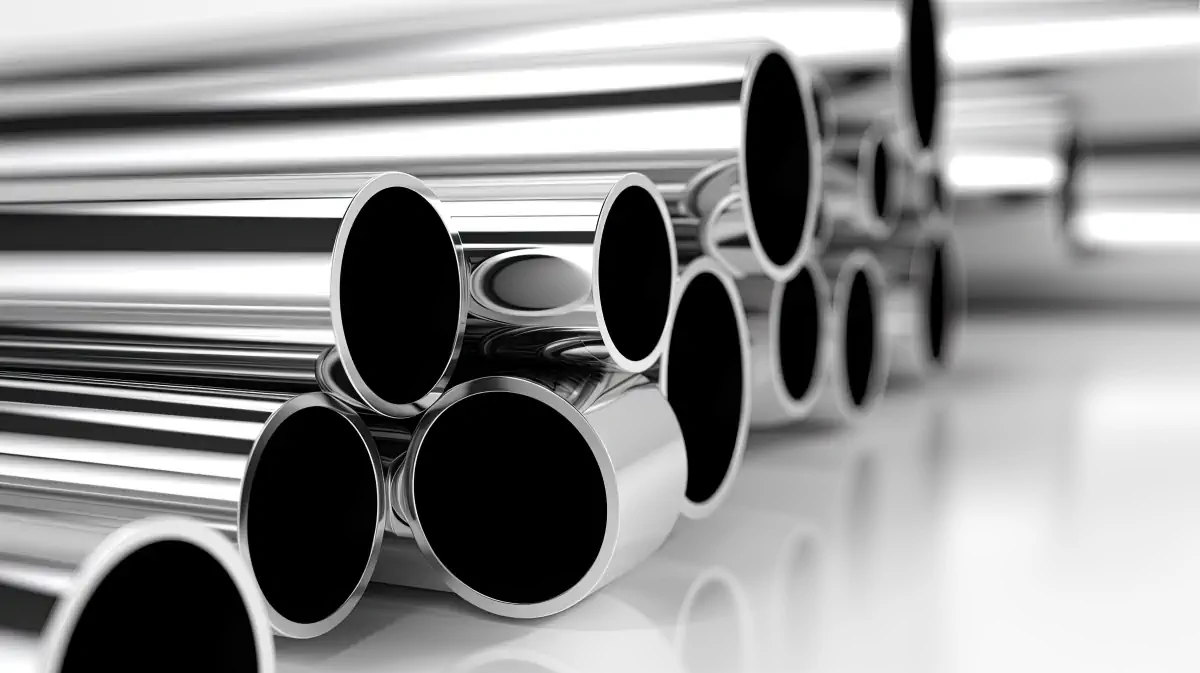


Stainless steel prices are primarily influenced by the cost of alloying elements such as nickel, chromium and molybdenum, alongside energy prices, manufacturing costs, exchange rates and global industrial demand. The grade of stainless steel, its chemical composition, product form, dimensions, surface finish and order volume also play a significant role in determining the final price.
Consequently, the price of 304 stainless steel can differ considerably from that of 316L, even though both belong to the austenitic family of stainless steels.
In 2026, the global stainless steel market continues to be shaped by fluctuations in raw material prices, international trade conditions, environmental regulations and changing levels of industrial activity. For businesses manufacturing process vessels, industrial pipework, storage tanks and specialist equipment, these factors can have a substantial impact on project budgets and procurement decisions.
What causes stainless steel prices to rise or fall? How much does stainless steel cost per kilogram? Why is 316L generally more expensive than 304, and what should industrial buyers expect from the market?
This guide examines the principal factors influencing stainless steel prices in 2026 and explains how manufacturers, engineers and procurement teams can make more informed purchasing decisions.
What Factors Affect Stainless Steel Prices?
The market price of stainless steel is determined by a combination of raw material costs, production processes, supply and demand, and wider economic conditions.
Unlike conventional carbon steel, stainless steel contains substantial quantities of alloying elements that provide its characteristic corrosion resistance and mechanical properties.
The most important factors affecting stainless steel prices include:
- Nickel prices: A major cost factor in austenitic stainless steel grades, particularly 304 and 316L.
- Chromium prices: Chromium is essential to the formation of the protective passive film responsible for stainless steel’s corrosion resistance.
- Molybdenum prices: Particularly significant in determining the cost of molybdenum-bearing grades such as 316 and 316L.
- Energy costs: Electricity, gas and other energy inputs influence melting, refining, rolling and finishing operations.
- Global supply and demand: Industrial production, construction activity and manufacturing investment affect purchasing volumes.
- Currency exchange rates: Movements in the euro, US dollar and pound sterling can influence material costs for British and European buyers.
- Transport and logistics: Freight charges, import arrangements and material availability affect delivered prices.
- Material specifications: Steel grade, dimensions, surface finish, certification requirements and order quantities all contribute to the final quotation.
Understanding these factors is essential when comparing stainless steel suppliers or preparing cost estimates for industrial projects.
Nickel Prices and Their Influence on Stainless Steel Costs
Nickel is one of the most commercially significant alloying elements used in austenitic stainless steel production.
Its principal metallurgical function is to stabilise the austenitic microstructure, contributing to a combination of toughness, ductility and formability.
Widely used AISI 304 stainless steel, corresponding to European grade 1.4301, typically contains between 8% and 10.5% nickel.
AISI 316L stainless steel, designated EN 1.4404, generally contains between 10% and 13% nickel.
Because nickel represents a substantial proportion of the alloying cost of these materials, changes in its market value can directly affect mill pricing.
How do rising nickel prices affect stainless steel prices?
When nickel prices increase, the cost of producing nickel-bearing stainless steel generally rises.
Depending on market conditions and the pricing arrangements of individual producers, these additional costs may be reflected in revised base prices, alloy surcharges or new supply quotations.
However, the relationship is not always immediate or proportional.
Stainless steel manufacturers may use different raw material sources, existing inventories, long-term supply agreements and financial hedging arrangements. These can influence how quickly changes in nickel prices are passed on to customers.
For businesses purchasing significant quantities of stainless steel plate, sheet, tube or pipework, even relatively small changes in material prices can have a substantial impact on project expenditure.
This is particularly relevant to manufacturers of pressure equipment, processing systems and large-scale industrial installations.
How Chromium and Molybdenum Affect Stainless Steel Prices
Although nickel receives considerable attention in stainless steel market analysis, chromium and molybdenum are equally important when assessing the costs and technical capabilities of different grades.
Chromium: The essential element in stainless steel
Chromium is the defining alloying element of stainless steel.
Stainless steel is generally characterised by a minimum chromium content of 10.5% and a maximum carbon content of 1.2%.
Chromium enables the formation of a thin, adherent passive oxide film on the material’s surface. This film provides protection against corrosion under suitable service conditions.
The cost of chromium-bearing raw materials, particularly ferrochrome, therefore contributes to stainless steel production costs.
Changes in ferrochrome prices, energy costs and mining output may influence the manufacturing costs of both austenitic and ferritic stainless steel grades.
Molybdenum: Why is 316L stainless steel more expensive?
Molybdenum improves resistance to certain forms of localised corrosion, particularly pitting and crevice corrosion in chloride-containing environments.
Grade 316L typically contains approximately 2–2.5% molybdenum, whereas standard grade 304 does not contain a deliberate molybdenum addition.
This difference in chemical composition is one of the principal reasons why 316L stainless steel generally commands a higher price than 304 stainless steel.
However, choosing a more expensive grade does not necessarily provide better value in every application.
Material selection must be based on the operating environment, process media, temperature, cleaning procedures and corrosion risks.
For a more detailed discussion of material selection in industrial equipment, see our article Stainless Steel: Why Is It the Ultimate Guarantee of Quality for Process Vessels?.
304 vs 316L Stainless Steel Prices: What Explains the Difference?
One of the most common questions in industrial stainless steel procurement concerns the price difference between grades 304 and 316L.
Although both are widely used austenitic stainless steels, their chemical compositions and corrosion performance differ.
| Property | 304 Stainless Steel (1.4301) | 316L Stainless Steel (1.4404) |
| Chromium content | 17.5–19.5% | 16.5–18.5% |
| Nickel content | 8–10.5% | 10–13% |
| Molybdenum content | No deliberate addition | 2–2.5% |
| Corrosion resistance | Suitable for many general industrial environments | Enhanced resistance to certain aggressive environments |
| Typical price position | Lower | Higher |
| Common applications | General fabrication, equipment and structural components | Chemical processing, hygienic systems and more demanding corrosive environments |
These are typical composition ranges for the grades shown. Applicable material standards and project specifications should always be consulted before procurement.
Is 316L stainless steel worth the additional cost?
Not necessarily.
Where grade 304 meets the corrosion resistance and mechanical requirements of an application, specifying 316L may introduce unnecessary material expenditure.
Conversely, where greater resistance to chloride-induced localised corrosion is required, the additional cost of 316L may be justified by improved reliability and a reduced risk of premature deterioration.
For industrial processing equipment, material selection should always consider the full operating conditions rather than purchase price alone.
Relevant factors include:
- Chemical composition and concentration of the process media.
- Operating and cleaning temperatures.
- Chloride exposure and corrosion potential.
- Required mechanical properties.
- Welding and fabrication requirements.
- Surface finish and hygiene specifications.
- Expected service life and maintenance requirements.
The lowest initial material cost does not always produce the lowest overall project cost.
How Much Does Stainless Steel Cost per Kilogram in 2026?
There is no single universal stainless steel price per kilogram. Prices vary according to material grade, product form, dimensions, surface condition, certification and the quantity ordered.
For example, the price per kilogram of 304 stainless steel sheet may differ significantly from that of seamless tube, precision bar or fabricated components manufactured from the same grade.
These variations reflect differences in manufacturing processes, material availability, processing requirements and distribution costs.
What determines the price of a particular stainless steel product?
When comparing supplier quotations, buyers should consider:
- Material grade: For example, EN 1.4301, 1.4307, 1.4401 or 1.4404.
- Product form: Sheet, plate, tube, pipe, bar, section or fabricated component.
- Dimensions: Thickness, diameter, length and manufacturing tolerances.
- Surface finish: Such as 1D, 2B, BA or specified mechanically finished surfaces.
- Material certification: Including inspection documentation where required, such as EN 10204 type 3.1 certificates.
- Order quantity: Larger orders may qualify for different commercial pricing.
- Stock availability: Non-standard sizes and specialist grades may involve longer lead times or additional costs.
- Delivery requirements: Freight, packaging, import procedures and delivery location.
For engineering and industrial manufacturing projects, the most reliable approach is to obtain a current quotation based on a complete material specification.
Published prices per kilogram may be useful for initial budgeting, but they should not be treated as definitive purchasing prices.
Stainless Steel Alloy Surcharges: What Are They and How Do They Work?
An important feature of stainless steel pricing is the alloy surcharge.
This is a variable pricing component used by certain stainless steel producers and suppliers to reflect fluctuations in the cost of alloying elements, particularly nickel, chromium and molybdenum.
Depending on the supplier’s pricing model, the material price may be calculated using a structure such as:
Stainless steel price = base price + alloy surcharge + additional processing and commercial costs
The precise calculation varies according to the producer, steel grade, product form and contractual arrangements.
Some suppliers revise their alloy surcharges periodically, often monthly.
Consequently, the final purchase price may change even if the quoted base price remains unchanged.
Why are alloy surcharges generally higher for 316L?
Grade 316L contains molybdenum and typically more nickel than grade 304.
These alloying additions increase the material’s production cost and can make its pricing more sensitive to changes in certain commodity markets.
When nickel or molybdenum prices rise, the cost difference between 304 and 316L may widen.
When those prices fall, the difference may narrow.
Understanding this mechanism is particularly valuable for procurement managers negotiating longer-term supply agreements or purchasing large quantities of stainless steel.

Stainless Steel Market Trends in 2026: Production, Demand and Supply
Developments in global stainless steel production directly influence material availability and international market conditions.
According to worldstainless, global stainless steel melt shop production reached approximately 64.2 million tonnes in 2025, representing an increase of 2.1% compared with 2024.
During the first six months of 2026, global production reached approximately 33 million tonnes, an increase of 5% compared with the corresponding period in 2025.
However, the European Union experienced a different trend, with stainless steel melt shop production declining by 3.7% year on year during the first half of 2026.
These figures demonstrate that growth in global production does not necessarily translate into stronger regional output or improved supply conditions for European manufacturers.
Why does Asian stainless steel production affect UK and European prices?
Asia accounts for the majority of global stainless steel production, with China occupying a particularly important position in international supply.
Changes in Chinese production volumes, domestic demand, inventories and export activity can influence international price competition.
Higher export availability may place downward pressure on global prices, while restricted supply, higher input costs or logistics disruptions can contribute to price increases.
However, the effect on UK and European buyers also depends on trade measures, import arrangements, freight costs, currency movements and the availability of specific grades.
For further industry context, read our analysis of Stainless Steel Production in Poland in 2025 and Forecasts for 2026–2027 Against the Background of the European Union.
How Energy and Manufacturing Costs Influence Stainless Steel Prices
Stainless steel manufacturing is an energy-intensive industrial process.
Production involves several stages, including melting, refining, casting, hot rolling, cold rolling and finishing.
Electricity and other energy inputs contribute significantly to the costs incurred by stainless steel producers.
Higher electricity and gas prices can therefore increase the cost of manufacturing stainless steel products.
Other important production costs include labour, equipment maintenance, refractory materials, environmental compliance and waste management.
Do higher energy prices always lead to higher stainless steel prices?
Not immediately.
Manufacturers may operate under long-term energy contracts, use hedging strategies or benefit from more efficient production technologies.
The extent to which additional energy costs are passed on to buyers also depends on market competition and supply conditions.
Nevertheless, sustained increases in energy costs can create upward pressure on stainless steel prices, particularly in regions where industrial electricity is relatively expensive.
For UK and European engineering businesses, energy prices remain an important factor when evaluating future material expenditure and manufacturing competitiveness.
How Exchange Rates Affect Stainless Steel Prices in the UK and Europe
Stainless steel is traded internationally, making currency movements an important consideration for industrial buyers.
For UK businesses purchasing material priced in euros or US dollars, changes in the pound’s exchange rate can directly influence the sterling cost of imports.
A weaker pound against the euro or US dollar can increase the price of imported stainless steel, even where the supplier’s original foreign-currency quotation remains unchanged.
Conversely, a stronger pound may reduce the sterling cost of imported materials.
Similar relationships apply to companies purchasing stainless steel in other European markets.
However, exchange-rate movements do not always lead to immediate changes in supplier price lists.
Existing stock, forward currency contracts and previously agreed supply arrangements may delay their impact.
Procurement teams should therefore monitor relevant exchange rates alongside nickel prices, alloy surcharges and supplier quotations.
How European Environmental Regulations Affect Stainless Steel Costs
Environmental and trade regulations are becoming increasingly important factors in the international stainless steel market.
One relevant development is the European Union’s Carbon Border Adjustment Mechanism, commonly known as CBAM.
CBAM is intended to address carbon leakage by applying carbon-related obligations to certain imported goods.
Its definitive phase commenced on 1 January 2026.
For stainless steel products and industrial components, the implications depend on the applicable commodity classification, product coverage and import arrangements.
The mechanism should not be interpreted as an automatic or uniform price increase across all stainless steel products.
Nevertheless, it adds another consideration when assessing the cost and regulatory implications of material procurement within the EU.
What does CBAM mean for British stainless steel buyers?
The EU CBAM and the UK’s separate carbon border policy framework should not be treated as interchangeable.
British importers must assess their obligations under applicable UK legislation, while businesses supplying material into the EU may need to consider relevant EU requirements.
For manufacturers operating across both markets, regulatory compliance and material traceability can influence procurement procedures, documentation requirements and overall project costs.
How Stainless Steel Prices Affect the Cost of Process Vessels and Industrial Equipment
For industrial equipment manufacturers, raw material cost is only one component of the finished product price.
A stainless steel process vessel, for example, requires more than an appropriate quantity of plate or sheet.
The final manufacturing cost also depends on vessel geometry, wall thickness, fabrication complexity, welding, surface treatment, inspection and applicable technical requirements.
Important cost factors include:
- Vessel dimensions and geometry.
- Material grade and wall thickness.
- Number and complexity of welded joints.
- Required surface roughness and finish.
- Non-destructive testing and inspection requirements.
- Hygienic design considerations.
- Design calculations and engineering documentation.
- Regulatory requirements and material traceability.
- Transportation, installation and commissioning.
As a result, two vessels with a similar material weight may have substantially different fabrication costs.
Why material selection matters when estimating equipment costs
Specifying a more expensive stainless steel grade without a clear engineering justification can unnecessarily increase project expenditure.
However, choosing a cheaper material that does not meet the corrosion resistance or performance requirements of the application may result in premature failure, contamination risks or costly production downtime.
A technically sound procurement decision must therefore balance initial material expenditure with reliability, compliance and expected service life.
At GMM INOX, the design and manufacture of stainless steel process vessels is approached with consideration for the customer’s operating conditions, material specifications and project-specific requirements.
Stainless Steel Fabrication Costs: Why Processing Matters
The overall cost of a stainless steel component extends beyond the purchase price of the raw material.
Processing operations such as cutting, bending, rolling, welding, grinding and surface finishing all influence the final manufacturing cost.
Stainless steel fabrication requires appropriate equipment, process control and contamination prevention to preserve the specified material characteristics.
These considerations are particularly important for equipment used in pharmaceutical, food processing, chemical and other hygiene-sensitive environments.
Stainless steel laser cutting
Laser cutting enables manufacturers to produce accurate components from stainless steel sheet and plate.
Depending on the material thickness, geometry and equipment used, laser cutting can offer high dimensional accuracy, consistent repeatability and efficient material utilisation.
Optimised nesting and accurate cutting processes can help reduce unnecessary material waste.
This is especially valuable when working with relatively expensive stainless steel grades or producing precision components for complex assemblies.
Read more in our technical guide, How Does Metal Laser Cutting Work?, or explore GMM INOX’s laser cutting services.
Stainless steel welding
Welding is a major cost consideration in the fabrication of stainless steel pipework, vessels and industrial assemblies.
The cost of welding depends on material thickness, joint preparation, access, welding method, inspection requirements and the required quality standard.
Incorrect welding procedures or inadequate post-weld treatment may compromise joint integrity, dimensional accuracy or corrosion performance.
In corrosion-sensitive applications, heat tint and contamination must also be properly addressed.
The cost of high-quality welding should therefore be assessed in the context of equipment reliability and long-term performance rather than simply the time required to complete a weld.
For further technical guidance, see Stainless Steel Welding: How to Weld Stainless Steel and Which Method to Choose.
GMM INOX also provides specialist industrial welding services for stainless steel components and equipment manufactured to individual technical specifications.
Stainless Steel Price Forecast: Will Prices Rise or Fall?
Forecasting stainless steel prices requires an assessment of raw material markets, energy costs, production volumes, economic conditions and international trade.
No single indicator can reliably predict future prices.
An increase in global stainless steel production does not automatically result in lower prices, just as rising nickel prices do not necessarily lead to an immediate or proportionate increase in the price of every stainless steel product.
For the remainder of 2026 and into 2027, three broad scenarios are worth considering.
Scenario 1: Stainless steel prices increase
Prices may rise if nickel, molybdenum or ferrochrome become more expensive, energy costs increase or stainless steel production is constrained.
A recovery in industrial demand could also place upward pressure on material prices.
Additional factors may include supply-chain disruptions, freight costs and changes in international trade conditions.
Scenario 2: Stainless steel prices remain relatively stable
Prices may stabilise if alloying element markets remain balanced, industrial demand develops steadily and production costs become more predictable.
Under these conditions, suppliers may be able to maintain comparatively stable commercial quotations.
However, price differences between stainless steel grades will continue to reflect their composition and production requirements.
Scenario 3: Stainless steel prices decrease
Prices may decline if global production exceeds demand, raw material costs fall or competition between producers intensifies.
Weaker industrial activity may also reduce demand for certain stainless steel products.
None of these scenarios should be treated as a guaranteed outcome.
For engineering and manufacturing businesses, the most practical approach is to keep material budgets under review, monitor supplier quotations and consider procurement timing as part of project planning.
How Can Businesses Reduce Stainless Steel Procurement and Fabrication Costs?
Reducing expenditure does not necessarily mean selecting the cheapest available stainless steel.
In industrial applications, cost optimisation should consider the entire manufacturing process and the long-term performance of the finished equipment.
Several practical measures can help.
Select the correct stainless steel grade
Avoid specifying a higher-alloyed material unless its properties are required by the application.
At the same time, ensure that the chosen grade meets the necessary corrosion resistance, mechanical and regulatory requirements.
Optimise material utilisation
Efficient cutting layouts, appropriate stock dimensions and well-planned production processes can reduce scrap and unnecessary material consumption.
Compare quotations on a like-for-like basis
Ensure that supplier quotations cover identical grades, tolerances, surface finishes, certification requirements and delivery conditions.
A lower quoted price may not represent better value if the material specification differs.
Plan procurement in advance
Early purchasing decisions can help reduce the risk of delays, particularly where non-standard dimensions, specialist grades or large material quantities are involved.
Use efficient fabrication methods
Appropriate cutting, forming and welding processes can reduce rework, improve repeatability and support better control of manufacturing costs.
Consider whole-life costs
Material durability, maintainability, corrosion resistance and equipment reliability may have a greater financial impact than the initial purchase price.
For complex industrial equipment, collaboration between design engineers, procurement specialists and the fabrication contractor is essential.
Conclusion: What Really Determines Stainless Steel Prices?
Stainless steel prices are shaped by a combination of alloying element costs, energy expenditure, manufacturing requirements, international trade and industrial demand.
Nickel, chromium and molybdenum remain particularly important in determining the cost of different stainless steel grades.
The price difference between 304 and 316L reflects differences in alloy composition, corrosion resistance and market conditions.
However, for industrial equipment manufacturers and engineering buyers, the purchase price per kilogram should never be the sole factor influencing material selection.
Corrosion performance, fabrication requirements, service conditions, regulatory compliance and expected equipment life are equally important considerations.
GMM INOX specialises in the design and fabrication of stainless steel equipment, including process vessels, industrial pipework and bespoke processing systems for the pharmaceutical and food industries.
By combining appropriate material selection with precision fabrication and project-specific engineering, businesses can achieve a more effective balance between technical performance, manufacturing cost and long-term reliability.
If you are planning a stainless steel fabrication project or require specialist manufacturing support, contact the GMM INOX engineering team to discuss your technical requirements.

