

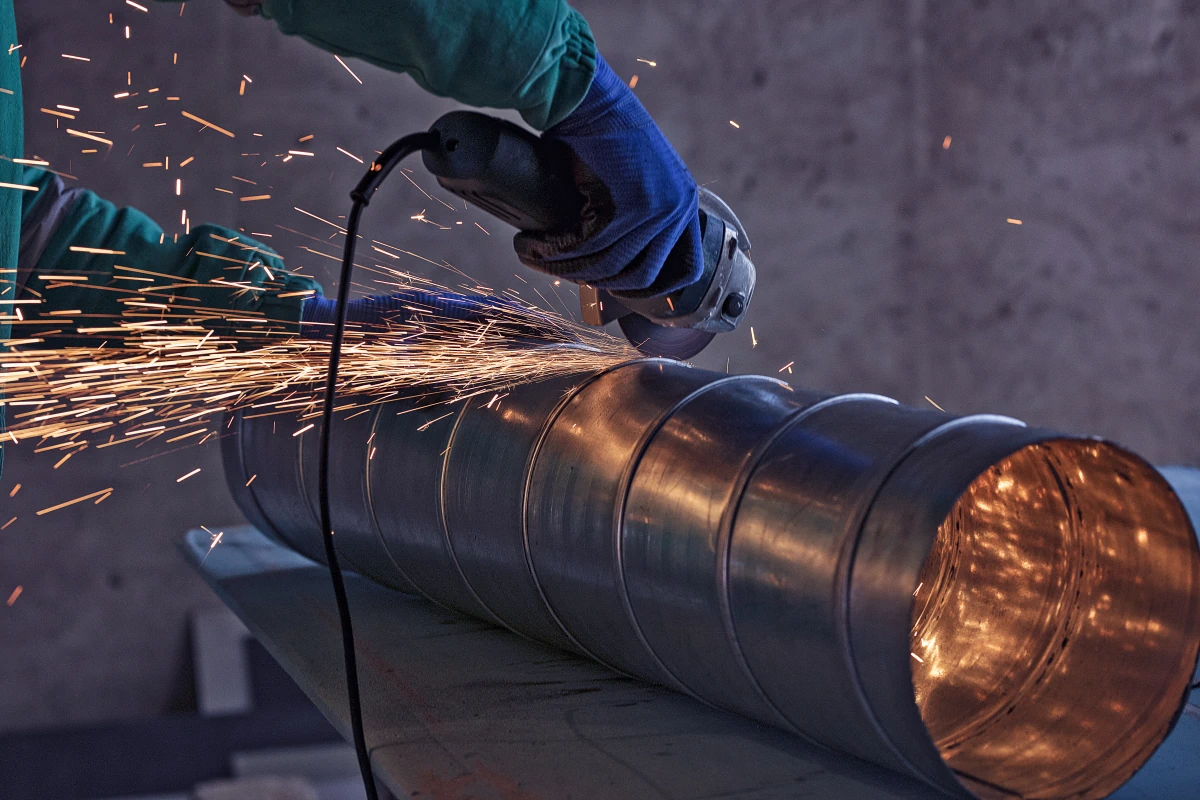


Pipe welding is a cornerstone of technological processes in industrial construction, power engineering, and the chemical, food, and petrochemical sectors. The quality of completed joints directly dictates the hermetic integrity, durability, and operational safety of the entire system. Whether for process pipelines, high-pressure systems, or hygienic installations, professional welding serves as the foundation of long-term reliability.
This guide explores pipe welding technologies, metallurgical requirements, quality control protocols, and strategic investment factors for contractors and technical supervisors.
1. Applications of Industrial Pipe Welding
Permanent joining of pipe sections and specialized components is critical across diverse sectors:
Industrial and Technological Installations: Core infrastructure for manufacturing.
Transmission Pipelines: High-pressure transport for gas and liquid fuels.
Hygienic Sectors: Precision systems for the pharmaceutical and food industries.
Power Engineering: District heating and steam generation systems.
HVAC and Refrigeration: Climate control and industrial cooling.
2. High-Performance Welding Methods
2.1 TIG Welding (GTAW)
TIG pipe welding is the gold standard for precision and weld purity. It is highly recommended for stainless steel installations in the food and chemical sectors, providing aesthetic, leak-proof, and corrosion-resistant joints.
2.2 Orbital Welding
A fully automated method essential for high-purity pharmaceutical applications. It ensures unparalleled repeatability and metallurgical consistency.
2.3 MIG/MAG Welding (GMAW)
An efficient, high-speed method primarily utilized for structural steel piping, effective for larger diameters and heavy-walled sections.
2.4 MMA Welding (SMAW)
The preferred method for field assembly and cross-country pipelines due to its resilience to adverse weather conditions.
3. Metallurgy and Material Selection
Material selection is a strategic decision affecting the installation’s lifecycle:
Stainless Steel (AISI 304, 316L): Standard for food-grade and chemical purity.
Carbon Steel: Cost-effective solution for structural and general industrial use.
Duplex and Super Duplex: Engineered for chemically aggressive environments.
Alloy Steels: Specialized for high-temperature power engineering.
4. Precision Preparation and Positioning
Professional pipeline welding requires rigorous pre-processing:
Beveling and Edge Preparation: Ensuring optimal penetration profiles.
Surface Decontamination: Removal of oxides, oils, and particulate matter.
Axial Alignment: Maintaining precise assembly gaps to avoid flow turbulence.
Positional Mastery: Welders must be qualified in difficult positions such as H-L045 (45° angle) to ensure joint integrity in complex structures.
5. Quality Standards and Regulatory Compliance
Pipe welding must adhere to international regulatory frameworks:
ISO 9606 / ISO 15614: Standards for welder and procedure qualification (WPS/WPQR).
ASME Section IX: Global benchmarks for pressure vessel and piping systems.
EN 13480: European standard for metallic industrial piping.
6. Non-Destructive Testing (NDT) and Control
To guarantee safety, joints undergo a series of NDT inspections:
VT (Visual Testing): Initial surface assessment.
RT (Radiographic Testing): Sub-surface integrity check via X-ray.
UT (Ultrasonic Testing): Detecting internal discontinuities and cracks.
PT / LT (Penetrant & Leak Testing): Ensuring hermetic reliability and zero porosity.
7. Economic Factors and Investment Safety
The cost of pipe welding is influenced by material complexity, diameter, and the required level of NDT testing. While technologies like orbital welding require higher initial capital, they significantly reduce the long-term risks of failure, downtime, and environmental hazards.
Partnering with a certified contractor like GMM INOX ensures that technical documentation and execution align with the project’s strategic safety goals.
8. Summary: The Future of Pipeline Engineering
Modern trends are shifting toward automation, robotic welding, and full digital traceability. By prioritizing weld quality and hygienic design, investors secure the operational stability of their assets and protect their long-term reputation in the global market.

