

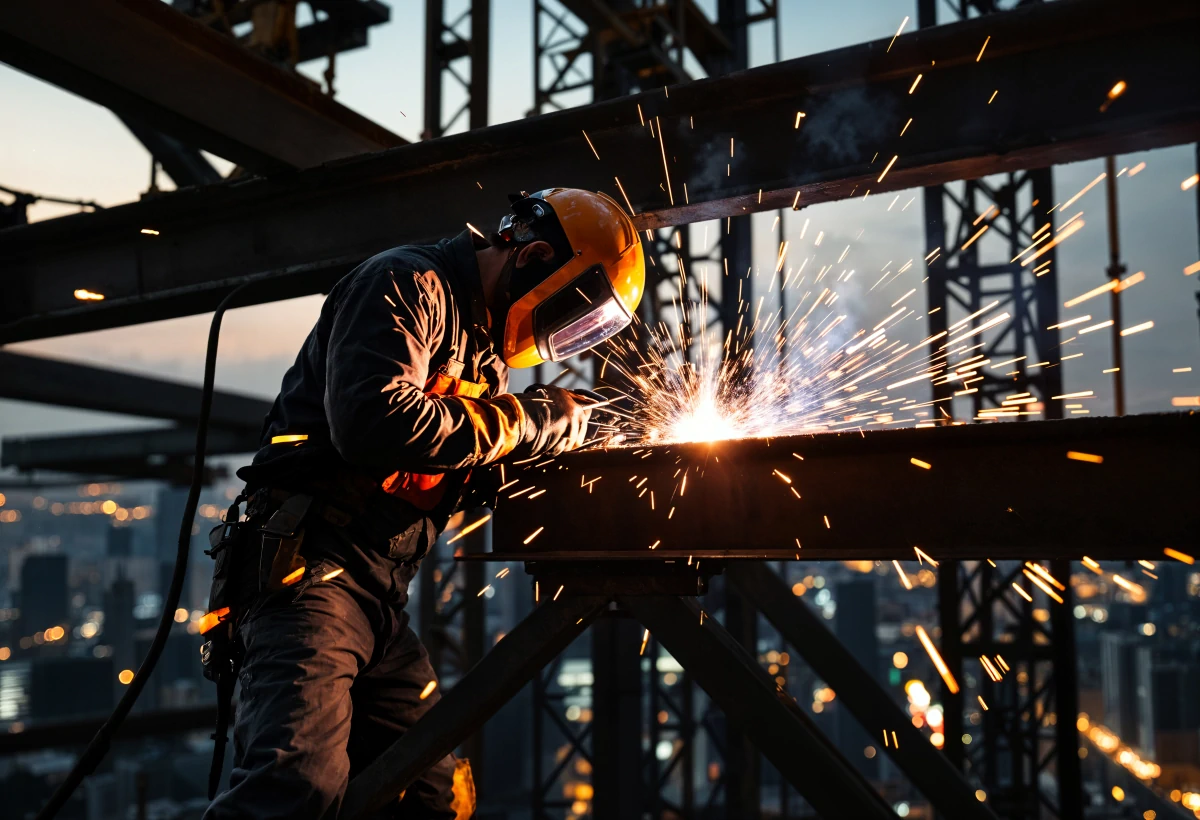

Commissioning welding work is more than a contractual agreement — it is a strategic decision that directly impacts the durability, structural safety, and aesthetic finish of an installation. Engaging with a contractor during the planning phase allows for a thorough assessment of their technical competence, professionalism, and attention to detail. Asking precise, technical questions significantly reduces the risk of costly rework and ensures a high-quality outcome.
Professional welding companies expect clear specifications regarding the scope of work, material grades, and quality standards. The more specific your inquiry, the better you can evaluate if a contractor can meet the technological requirements of your project.
1. What Are the Welder’s Qualifications and Industry Experience?
A welder’s certifications are the foundation of a reliable project. It is essential to verify not only their years of experience but also their specific WPQR (Welding Procedure Qualification Record) and individual certificates. Proficiency in methods such as TIG (GTAW), MIG/MAG (GMAW), or Orbital Welding is critical.
Experience with specific materials is equally important—welding AISI 316L stainless steel for pharmaceutical applications requires a different skill set and level of precision than structural carbon steel or aluminum. A professional partner should provide a portfolio of completed projects and demonstrate a deep understanding of the challenges associated with your specific sector.
2. What Are the Protocols for Material Preparation and Fit-Up?
Material preparation is a decisive stage for weld integrity. Even an expert welder cannot compensate for poorly prepared base materials. Contaminants such as oils, oxidation, or rust will lead to porosity and weld failure.
Key technical inquiries should cover:
Edge Preparation: Are components correctly beveled and cleaned?
Alignment: How is axial alignment and assembly gap stability ensured?
Parameter Control: Does the contractor follow a specific WPS (Welding Procedure Specification) regarding current, voltage, and shielding gas flow?
3. Which Welding Technologies and Methods Will Be Applied?
The choice of technology dictates the joint’s durability and hygienic properties. TIG welding offers superior precision and cleanliness, while MIG/MAG is preferred for high-speed joining of heavy-walled structures. In the food and pharmaceutical industries, Orbital Welding is often a non-negotiable requirement for repeatability and high-purity standards.
Ask your contractor why they recommend a specific method and how it aligns with your project’s functional requirements and safety standards.
4. How is Quality Control (QC) and Acceptance Testing Performed?
Weld quality assurance must be an integral part of the workflow. Beyond a simple visual check, professional companies utilize Non-Destructive Testing (NDT) methods to ensure compliance with international standards.
Ensure your contractor provides:
Visual Testing (VT): For surface integrity.
Radiographic (RT) or Ultrasonic Testing (UT): For internal defect detection.
Documentation: Full acceptance reports, NDT certificates, and traceability logs.
5. What is the Project Management and Timeline Strategy?
Efficient work organization is vital for meeting deadlines and maintaining budget transparency. Establish clear expectations regarding the project schedule, material lead times, and communication protocols.
A professional team should implement interpass inspections and a structured schedule for quality tests, allowing them to proactively address any technical irregularities before they impact the final delivery.
Summary: Building a Partnership Based on Quality
A conscious approach to commissioning welding services is the bedrock of a successful industrial investment. By vetting a contractor’s qualifications, preparation standards, and QC protocols, you minimize operational risks and ensure that your installations are durable, safe, and compliant with global engineering standards.
By choosing an experienced partner like GMM INOX, both the investor and the contractor gain the certainty that every detail will meet the highest quality and safety benchmarks.

