

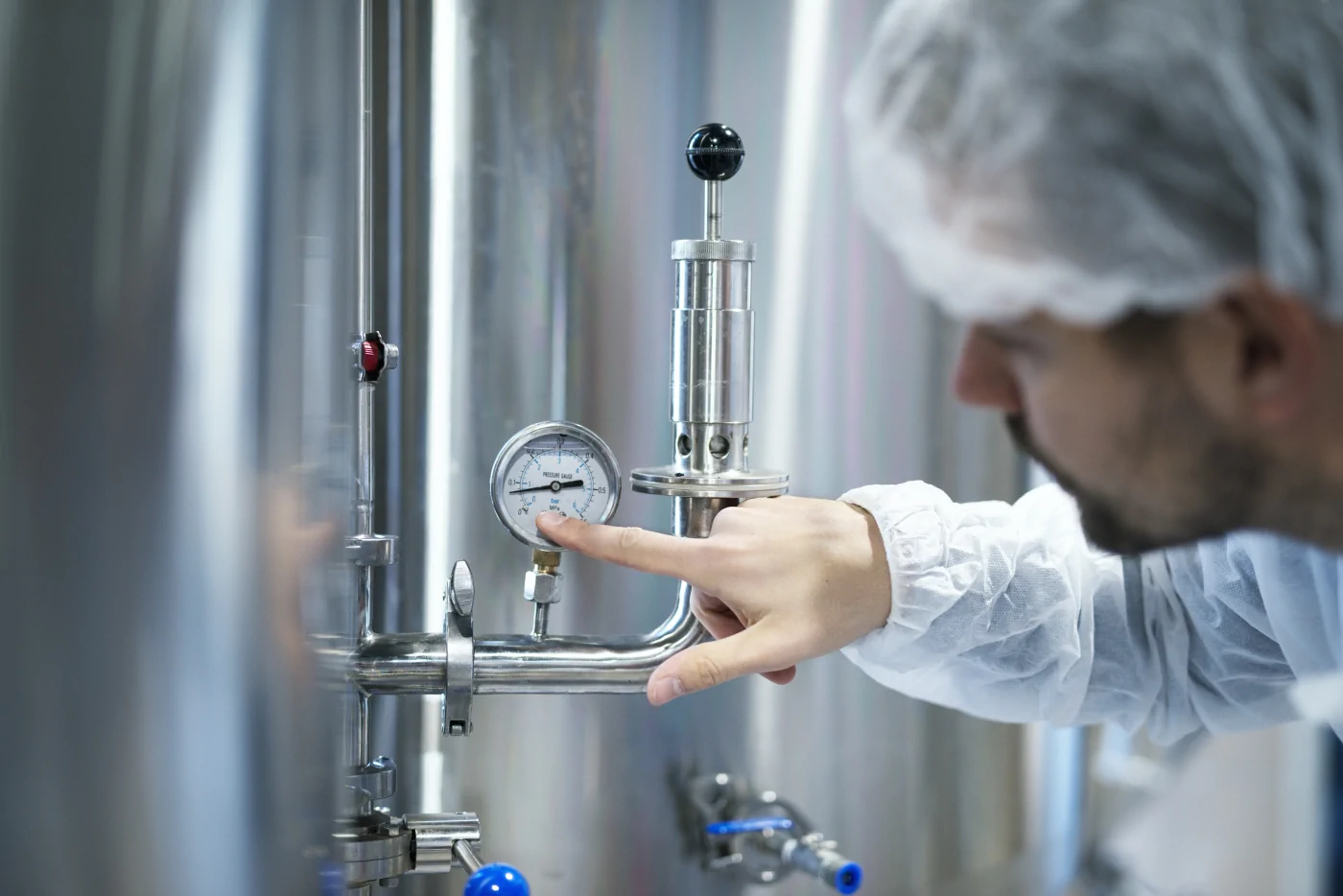


Industrial pipelines are one of the key infrastructure elements of any production plant. They transport process media, steam, condensate, process water, chilled water, compressed air, technical gases, aggressive liquids, food products, semi-finished goods, chemicals, and many other media necessary for the proper operation of the technological process.
The choice of material from which an industrial pipeline is made has a direct impact on the safety, tightness, durability, and resistance of the entire installation. A pipeline for transporting process steam requires a different material, a food industry installation requires another, and a system working with chemically aggressive liquids requires yet another.
Therefore, when designing technological and industrial pipelines, one cannot be guided solely by the price of the material. Much more important are the operating parameters of the installation, the type of medium, temperature, pressure, hygiene requirements, corrosion resistance, ease of cleaning, and the expected lifespan of the system.
At GMM INOX, we manufacture industrial pipelines from materials selected individually for a specific process. Depending on the investor’s needs and the operating conditions of the installation, we can manufacture pipelines from, among others, stainless steel, acid-resistant steel, carbon steel, Duplex alloys, Hastelloy, titanium, and other materials required in the technical documentation.
Why does the material of an industrial pipeline matter so much?
The pipeline material determines whether the installation will be safe, tight, and resistant to the conditions in which it is to operate for many years. In industry, pipelines are often operated continuously, under variable pressure, at high or low temperatures, in contact with aggressive media, cleaning agents, or substances requiring high purity.
A poorly chosen material can lead to numerous problems. Most often, these include corrosion, leaks, difficulties in maintaining hygiene, premature wear of installation elements, deformations, weld cracking, valve failures, and the necessity of costly pipeline modernization.
On the other hand, a well-chosen material allows for increased installation durability, reduced risk of downtime, improved process safety, and the adaptation of the pipeline to the real operating conditions of the plant. This is precisely why the choice of material should be one of the first stages of industrial pipeline design.
What does the choice of material for an industrial pipeline depend on?
There is no single universal material that will work in every plant and with every medium. The selection of material should always result from technical analysis.
The most important factors are:
- the type of medium being transported,
- the operating temperature of the installation,
- working pressure,
- chemical aggressiveness of the medium,
- hygiene requirements,
- frequency of washing and sterilization of the installation,
- contact with acidic, alkaline substances, or chlorides,
- risk of corrosion,
- location of the pipeline inside or outside the facility,
- industry and regulatory requirements,
- ability to execute appropriate welds,
- planned lifespan of the installation,
- investment budget and subsequent operating costs.
In practice, this means that the same plant may need several different types of pipelines. One installation may be made of stainless steel, another of carbon steel, and a third of a material with increased corrosion resistance, such as Duplex or Hastelloy.
Stainless steel in industrial pipelines
Stainless steel is one of the most frequently chosen materials for the construction of industrial and technological pipelines. It is used wherever corrosion resistance, high surface quality, aesthetic execution, durability, and ease of cleaning are important.
Stainless steel pipelines perform very well in the food, pharmaceutical, cosmetic, chemical, and biotechnological industries, as well as in plants where installations come into contact with process water, process media, or substances requiring clean transport.
One of the biggest advantages of stainless steel is its corrosion resistance in many industrial environments. This material handles contact with moisture, frequent washing, and many media used in production processes well. Additionally, stainless steel allows for high-quality welds, which is of great importance in hygienic pipelines.
Industrial pipelines made of AISI 304 steel
AISI 304 stainless steel is a popular and versatile material used in many industrial installations. It is used where the working environment is not highly chemically aggressive, but corrosion resistance, aesthetics, and ease of cleaning are required.
AISI 304 steel pipelines can be used, among other things, in process water installations, selected process media, auxiliary installations, pipelines in production plants, and in systems where high concentrations of chlorides or strongly aggressive substances are not present.
This is a solution often chosen where a good balance between utility parameters and investment costs is needed. However, it should be remembered that AISI 304 will not always be the best choice for highly corrosive environments. In such cases, it is worth considering 316L steel, Duplex, or other specialized materials.
Industrial pipelines made of AISI 316L steel
AISI 316L steel is a material with increased corrosion resistance, often used in more demanding industrial installations. Due to its resistance to many chemical factors, it is used in the food, pharmaceutical, chemical, and cosmetic industries, as well as in installations that come into contact with media more aggressive than standard process water.
316L steel pipelines perform very well where the installation must be durable, hygienic, and resistant to frequent washing. This material is often chosen for process pipelines, CIP systems, technological liquid transport systems, and systems where the quality of the internal surface is of great importance.
At GMM INOX, 316L stainless steel is one of the materials that can be used in the implementation of technological and industrial pipelines tailored to the requirements of a specific plant.
Acid-resistant steel in industrial installations
Acid-resistant steel is used where pipelines come into contact with media of increased chemical aggressiveness. In practice, this term often refers to stainless steels with better resistance to acids, chlorides, and corrosive environments.
Acid-resistant steel pipelines are particularly important in the chemical, pharmaceutical, food, and cosmetic industries, as well as in installations that use cleaning agents, disinfectants, or process substances that can accelerate corrosion.
In such applications, not only the steel grade itself matters, but also the quality of execution. A poorly made weld, surface contamination, incorrect post-weld treatment, or contact with inappropriate materials can weaken the installation’s resistance. Therefore, acid-resistant pipelines should be executed by a team with experience in welding and processing corrosion-resistant materials.
Carbon steel in industrial pipelines
Carbon steel is still widely used in many industrial installations. Compared to stainless steel, it is often more cost-effective, and with proper selection and protection, it can perform very well in specific technical applications.
Carbon steel pipelines are used, among other things, in steam, condensate, hot water, process water, compressed air, power engineering, and district heating installations, as well as in selected technological systems where the medium does not require stainless or acid-resistant steel.
In the case of carbon steel, corrosion protection, proper wall thickness selection, weld quality, and control of the installation’s operating conditions are particularly important. In many cases, carbon steel can be a very good solution, but it should not be used where high hygienic standards, resistance to aggressive chemicals, or frequent contact with moisture without proper protection are required.
Duplex – pipelines for more demanding environments
Duplex is a group of stainless steels with very good mechanical properties and high corrosion resistance. Materials of this type are used where standard stainless steel may prove insufficient.
Duplex industrial pipelines perform particularly well in environments exposed to chloride, pitting, and stress corrosion cracking. They can be used in the chemical, petrochemical, energy, marine, water and sewage industries, and in installations that must combine corrosion resistance with high mechanical strength.
The use of Duplex steel is worth considering when the installation is to operate in difficult conditions, and a pipeline failure could mean high costs, production downtime, or a threat to process safety.
However, the fabrication of Duplex pipelines requires appropriate technological knowledge. This material must be properly welded, controlled, and processed in accordance with the requirements for the given grade. This is why choosing a contractor who knows how to select not only the material but also the appropriate manufacturing technology is important.
Hastelloy – pipelines for chemically aggressive media
Hastelloy is a specialized nickel alloy used in the most demanding industrial installations. It is chosen when the pipeline comes into contact with strongly chemically aggressive media, and standard stainless or acid-resistant steel does not provide sufficient resistance.
Hastelloy pipelines can be used in the chemical, pharmaceutical, petrochemical industries, and in installations where highly corrosive substances are transported. This material is a specialized solution, therefore its application should result from a detailed analysis of the process, medium composition, temperature, pressure, and operational requirements.
In the case of Hastelloy pipelines, execution quality is extremely important. Welding errors, incorrect technology selection, or a lack of quality control can significantly reduce the durability of the installation. Therefore, such materials should be used in projects where the contractor has experience working with special alloys.
Titanium in industrial pipelines
Titanium is a material used in installations with particularly high resistance requirements. It is characterized by very good corrosion resistance in many environments and a favorable strength-to-weight ratio.
Titanium pipelines can be utilized in selected chemical, pharmaceutical, energy, and marine installations, as well as in processes where other materials do not provide adequate durability. Titanium is a specialized material, which is why it is most commonly used where process requirements justify the higher investment cost.
Similarly to Hastelloy or Duplex, the fabrication of titanium installations requires appropriate welding technology, experience, and quality control. Titanium is not a material chosen by chance. It should be used where the specific operating conditions of the installation require its properties.
Aluminum in installation elements and industrial structures
Aluminum is not a primary material for typical technological pipelines used to transport demanding process media, but it finds application in selected industrial elements, auxiliary structures, housings, covers, machine components, and details manufactured based on technical documentation.
At GMM INOX, we also carry out welding and processing work with aluminum when required by the project. This material can be a good solution where low weight, resistance to atmospheric corrosion, and ease of machining matter. However, its application in pipeline installations should always result from a technical analysis and the requirements of a specific process.
Hygienic pipelines – what materials are used in the food and pharmaceutical industries?
In the food and pharmaceutical industries, the pipeline material is of immense importance. The installation must not only be tight and durable, but also easy to clean, resistant to cleaning agents, and safe for the transported product.
In such applications, stainless and acid-resistant steel are most commonly used, particularly grades ensuring high corrosion resistance and the ability to achieve appropriate surface quality. Smooth welds, the minimization of dead zones, proper installation slope, CIP cleaning capability, and compliance of the execution with the plant’s requirements are also important.
Hygienic pipelines can be used, among other things, for transporting liquid products, semi-finished goods, process water, auxiliary media, cleaning substances, and technological media used in production. In such installations, there is no room for a random choice of material. Every element should be tailored to the process and operating conditions.
Pipelines for steam, condensate, and high-temperature media
Steam and condensate installations require materials resistant to temperature, pressure, and variable operating conditions. Depending on process parameters, carbon steel, stainless steel, or other materials matched to the requirements of the specific installation are used.
In the case of steam pipelines, thermal expansion compensation, appropriate supports, drainage, thermal insulation, and weld quality are also very important. The material must work safely for a long time, and the entire installation should limit energy losses and the risk of failure.
The material selection for process steam should not be separated from the overall project. Not only the pipe itself matters, but also the valves, seals, insulation, routing method, and the possibility of subsequent servicing.
Pipelines for aggressive liquids and chemical media
In chemical and process installations, one of the most important criteria for material selection is resistance to the aggressiveness of the medium. Acidic and alkaline liquids, solvents, chemical mixtures, and substances containing chlorides can quickly damage a poorly chosen pipeline.
In such cases, 316L steel, acid-resistant steels, Duplex, Hastelloy, titanium, or other specialized materials are often used. The final choice depends on the medium composition, concentration, temperature, pressure, flow rate, and operational conditions.
An analysis of the installation cleaning process is also very important. Even if the production medium is not highly aggressive, cleaning or disinfecting agents can affect the durability of the material. This particularly applies to installations operating in the food, pharmaceutical, and cosmetic industries.
Pipelines for compressed air and technical gases
Pipelines for compressed air and technical gases can be made of various materials, depending on process requirements, medium quality, pressure, and the working environment. In many plants, stainless steel, carbon steel, or other solutions adapted to the installation parameters are used.
In the case of compressed air, the purity of the medium, the installation’s resistance to condensate, connection tightness, and the minimization of pressure drops are important. A poorly chosen or poorly executed pipeline can cause energy losses, air quality problems, and unnecessary compressor loading.
In technical gas installations, tightness, material compatibility, and compliance with safety requirements are extremely important. Therefore, material selection should be conducted individually for each medium.
What industrial pipelines can we fabricate at GMM INOX?
At GMM INOX, we fabricate technological and industrial pipelines tailored to specific production processes and investor requirements. We do not rely on a single universal solution, because in industry, every installation can operate under different conditions.
We can fabricate, among others:
- stainless steel pipelines,
- acid-resistant steel pipelines,
- AISI 304 steel pipelines,
- AISI 316L steel pipelines,
- carbon steel pipelines,
- structural steel pipelines,
- Duplex pipelines,
- special alloy pipelines, such as Hastelloy,
- titanium pipelines,
- aluminum installation elements and structures,
- hygienic pipelines,
- technological pipelines,
- steam and condensate installations,
- technical media networks,
- installations for technical gases,
- chilled water installations,
- pipelines for aggressive liquids,
- process installations for the food, pharmaceutical, chemical, and energy industries.
We analyze every project in terms of medium, temperature, pressure, working environment, hygiene requirements, and expected durability of the installation. Thanks to this, we can select the material that will best suit the given application.
Welding and quality of execution of industrial pipelines
Material selection alone is not enough for an industrial pipeline to be durable and safe. Equally important are the manufacturing technology, weld quality, joint inspection, and compliance with technical documentation.
In stainless and acid-resistant steel pipelines, TIG welding is very frequently used, which allows for high quality and aesthetics of the welds. This is of particular importance in hygienic installations, where the inner surface of the pipeline should be smooth, easy to clean, and free from areas prone to accumulating contaminants.
Depending on the project, it is also possible to use other welding technologies, such as MIG/MAG, especially for larger steel structures or auxiliary elements. The key is that the welding method is tailored to the material, thickness, quality requirements, and function of the pipeline.
Certified components and compliance with documentation
In industrial installations, repeatability, safety, and the ability to verify the quality of the applied materials are of great importance. Therefore, during the construction of technological pipelines, components selected in accordance with technical documentation and the investor’s requirements are utilized.
Certified materials and valves allow for better quality control of the entire installation. This is of particular significance in plants where pipelines are part of a process subject to high quality requirements, for example in the pharmaceutical, food, or chemical industries.
A well-prepared technical documentation, appropriate material selection, and quality control of execution affect the safe operation of the installation for many years.
How to choose the material for a specific industrial pipeline?
The selection of the material should be preceded by a process analysis. One should not choose a material solely because it is popular or cheaper than an alternative. In practice, several basic questions should be answered:
- What medium will be transported?
- Is the medium chemically aggressive?
- What is the operating temperature?
- What is the working pressure?
- Will the installation be regularly washed or sterilized?
- Are hygienic standards required?
- Will the pipeline be routed outdoors?
- Will the installation be exposed to chlorides, moisture, or chemical agents?
- How long is the pipeline supposed to operate without modernization?
- Does the installation require a specific weld quality?
- Must the material comply with the customer’s documentation or industry requirements?
Only after such an analysis can it be determined whether the best choice will be stainless steel, acid-resistant steel, carbon steel, Duplex, Hastelloy, titanium, or another specialized material.
Common mistakes in choosing material for industrial pipelines
One of the most frequent mistakes is choosing a material based solely on price. A cheaper material may lower the investment cost initially, but if it is not resistant to the given medium or working conditions, it may lead to failure and significantly higher costs in the future.
The second mistake is using a single material for the entire installation without analyzing individual sections. In practice, various fragments of the system may operate under different conditions. Part of the installation may require stainless steel, part carbon steel, and part a special alloy.
Another problem is omitting the impact of washing, disinfection, and chemical agents. In the food, pharmaceutical, and cosmetic industries, the cleaning process itself can be one of the most demanding factors for the material.
It is also a mistake not to take welding quality into account. Even the best material will not fulfill its function if it is improperly joined, overheated, or contaminated during processing.
Custom industrial pipelines – why is it worth opting for individual material selection?
Every production plant has a different specificity. Media, temperatures, pressures, hygienic requirements, hall layout, access to the installation, maintenance standards, and expectations regarding durability all differ. Therefore, industrial pipelines should be designed and manufactured individually.
Individual material selection allows to avoid oversizing the installation, reduce the risk of corrosion, improve process safety, and optimize investment costs. In many cases, it is not about choosing the most expensive material, but about choosing the material best suited to the working conditions.
At GMM INOX, we fabricate industrial pipelines based on technical documentation or design arrangements. We select materials for the process, manufacture installation elements, weld, machine, and prepare solutions in accordance with customer requirements.
Summary
Industrial pipelines can be made of many materials, and the choice of the right solution depends on the operating conditions of the installation. Most commonly, stainless steel, acid-resistant steel, and carbon steel are used, and in more demanding cases also Duplex, Hastelloy, titanium, and other specialized materials.
Stainless steel performs well in hygienic and process installations. Acid-resistant steel is a good choice for environments with higher chemical aggressiveness. Carbon steel can be used in many technical and energy installations. Duplex, Hastelloy, and titanium are utilized where special corrosion resistance, high operating parameters, or contact with difficult media are required.
At GMM INOX, we fabricate technological and industrial pipelines from materials selected for the specific medium, process, and industry. Thanks to our experience in processing and welding stainless steel, acid-resistant steel, structural steel, and specialized materials, we can deliver installations tailored to the requirements of the food, pharmaceutical, chemical, energy, and many other sectors.
If you are planning the construction, expansion, or modernization of industrial pipelines, it is worth starting with the correct material selection. It is precisely the material, the quality of execution, and the adaptation to the process that determine the durability, safety, and reliability of the entire installation. Remember that we do everything to order and according to the individual specifications of the customer, from planning and design to implementation.

