

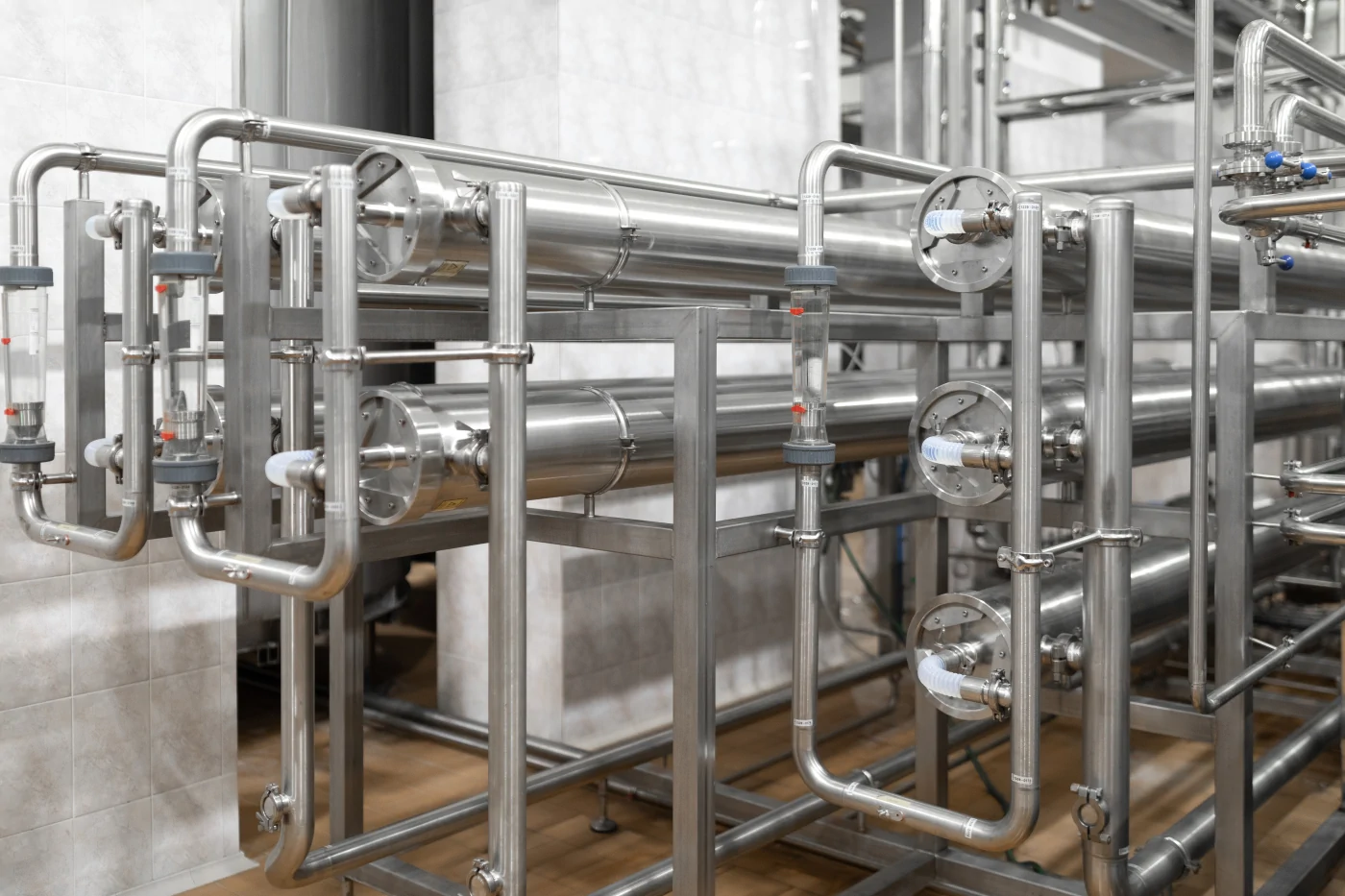


Industrial pipelines are a critical infrastructure component in manufacturing plants. They transport process media, technological steam, condensate, chilled water, glycol, compressed air, industrial gases, chemicals, aggressive liquids, and materials utilized across various production stages. Their proper engineering and fabrication dictate the safety, operational continuity, and efficiency of the entire process.
In practice, however, piping fabrication is only one phase of system construction. Equally vital is a properly selected industrial pipe insulation system. It minimizes energy losses, stabilizes the temperature of the conveyed medium, protects personnel from contact with hot or cold surfaces, reduces the risk of moisture condensation, and supports long-term system durability over extended operation.
A well-engineered technical insulation system is neither an aesthetic add-on nor an afterthought installed at the end of a project. For process piping, insulation must be factored in right from the design phase—encompassing routing, material selection, pipe supports, fittings, thermal expansion compensation, and service accessibility. This is especially critical in facilities where systems operate continuously and any downtime can generate massive costs.
What is industrial pipe insulation?
Industrial pipe insulation comprises technical material systems installed over the surfaces of pipes, fittings, elbows, tees, flanges, valves, and other system components. Their primary function is to control heat transfer between the fluid or gas conveyed inside the pipeline and the surrounding environment.
Depending on the application, insulation can serve multiple functions simultaneously. For hot pipelines, it minimizes heat loss and mitigates burn hazards. For cold systems, it prevents ambient heat gain and moisture condensation. For pipelines exposed to harsh environmental conditions, it acts as a protective barrier against external factors, and in select applications, it also dampens flow-induced noise.
This is precisely why insulation must be treated as an integral part of any process system. Its selection depends on a multitude of parameters, including medium temperature, operating pressure, pipe diameter, steel grade, facility location, hygienic requirements, environmental aggressiveness, maintenance accessibility, and the overall operating conditions of the plant.
Why is industrial pipe insulation so crucial?
In industrial facilities, pipelines often operate for many hours a day, and in many cases, on a continuous 24/7 basis. Even minor thermal losses or gains accumulating over long runs of piping can translate into substantial operational costs on a monthly or annual scale.
A properly specified industrial pipe insulation system helps mitigate these losses and maintains process parameters at a stable level. This is especially critical when the conveyed medium must reach a specific point in the system at a precise temperature. Key examples include technological steam, condensate, chilled water, glycol, heating and cooling media, and process chemicals utilized directly in manufacturing.
Safety represents another vital consideration. An uninsulated pipeline carrying a high-temperature medium poses a severe burn hazard to operators and maintenance personnel. Conversely, a cold installation lacking effective vapor-tight insulation can lead to moisture condensation, insulation saturation, corrosion under insulation (CUI), and the degradation of overall system performance.
Plant longevity constitutes the third major area of impact. Industrial pipelines are long-term capital investments. If insulation is improperly selected, poorly installed, or missing a durable protective cladding, the system will prematurely require repairs, retrofitting, or partial replacement. For manufacturing plants, this entails not only expensive maintenance intervention but also the risk of unplanned production downtime.
Pipe insulation and industrial plant engineering
The single biggest mistake is treating insulation as an afterthought that can be addressed only after piping fabrication is complete. In modern industrial piping design, insulation requirements must be factored in right from the earliest engineering stages.
The design phase must account for parameters such as:
- operating fluid/gas temperature,
- ambient temperature,
- indoor or outdoor plant location,
- pipe diameters,
- insulation thickness,
- protective cladding type,
- access to valves, flanges, and instrumentation points,
- thermal expansion compensation,
- type of pipe supports and hangers,
- hygienic and industry-specific requirements,
- removability of insulation for future maintenance.
For installations fabricated from stainless or acid-resistant steel, material compatibility with process chemistry is paramount. Pipelines serving the food, pharmaceutical, or chemical industries often demand not only corrosion resistance but also high execution purity, carefully engineered welds, optimal routing, and well-thought-out access to components requiring inspection.
GMM INOX engineers and fabricates process and industrial pipelines with a strong focus on the safe transport of process media. In practice, this means that right from the installation planning stage, attention must be given not just to the pipe itself, but to the entire system: materials, welding, valves and fittings, supports, insulation, cleanability, quality inspections, and long-term operation.
Types of industrial pipe insulation
Technical pipe insulation systems can be categorized by their primary function within the system. In practice, they are most commonly classified as thermal (hot), cryogenic/cold, anti-condensation, acoustic, or protective insulation.
Thermal (hot) pipe insulation
Thermal insulation for industrial pipelines is applied to systems transporting media at temperatures higher than the ambient surroundings. This applies to steam lines, condensate return systems, hot process water, thermal oils, and selected high-temperature process fluids.
Its primary function is to minimize heat loss. This allows the medium to maintain required parameters over the entire length of the system, preventing the heat source from operating under excessive load. In a well-designed setup, this translates to improved process stability and lower operating costs.
Thermal insulation also serves a safety function. It reduces the surface temperature of the external cladding, limiting the risk of accidental worker contact with hot piping. This is particularly critical in production plants, boiler rooms, technical spaces, and along piping routes accessible to operating staff.
Cryogenic and cold pipe insulation
Cold insulation is applied to pipelines that transport media at temperatures lower than the surrounding environment. This includes chilled water systems, glycol loops, brine systems, refrigerants, and selected process cooling installations.
In this case, the insulation not only restricts ambient heat gain but, most importantly, protects the installation against moisture condensation. If the pipeline surface temperature drops below the dew point, ambient moisture will condense on its exterior. Over time, this results in water-logged insulation, loss of thermal efficiency, corrosion development, and operational failures.
Consequently, the integrity of the vapor barrier is paramount in cold systems. Alongside the appropriate insulation material, vapor-stop barriers are deployed, along with meticulous sealing of joints, pipe penetrations, elbows, and fittings. Even a minor breach can allow moisture to infiltrate the insulation layers.
Anti-condensation insulation
Anti-condensation insulation is exceptionally vital in refrigeration and low-temperature systems. Its purpose is to keep the external surface temperature of the insulation above the dew point or to create a vapor-tight barrier preventing moisture from reaching the cold pipe surface.
In practice, this type of insulation is used on chilled water piping, refrigeration loops, glycol lines, and select industrial HVAC installations. Flawed insulation execution can lead to moisture accumulation, water staining, cladding damage, corrosion of steel components, and compromised hygiene within production areas.
This holds particular significance in industries such as food processing and pharmaceuticals. Uncontrolled moisture can negatively affect the cleanliness of the manufacturing environment and impede adherence to strict sanitary standards.
Acoustic pipe insulation
Certain industrial installations generate noise resulting from fluid or gas flow, valve operations, pressure reducers, compressors, pumps, or other equipment connected to the piping network. In such cases, acoustic insulation is deployed to curb noise emissions into the surrounding environment.
Acoustic insulation can be particularly important in facilities where piping runs close to workstations, technical rooms, corridors, or equipment requiring continuous operator presence. A properly engineered system can improve workplace comfort and support compliance with occupational health and safety (OH&S) requirements.
Protective insulation and exterior cladding
The insulation layer requires protection against mechanical damage, moisture, UV radiation, dirt, and weathering. Consequently, industrial pipelines are frequently finished with protective cladding made of aluminum, galvanized steel, or stainless steel sheets.
The outer jacket serves both protective and aesthetic functions. It shields the insulation from degradation and facilitates easy cleaning of the installation. In environments with elevated hygiene requirements, such as the food, pharmaceutical, or cosmetics industries, the cladding material must be selected to withstand washdown procedures and resist cleaning agents used in the plant.
What materials are used for industrial pipe insulation?
The selection of insulation material depends on the system function, operating temperature, environment, fire safety requirements, moisture resistance, and expected durability. In practice, a variety of solutions are utilized and should be tailored specifically to each project.
Mineral and rock wool
Mineral and rock wool is one of the most widely used materials for hot pipe insulation. It performs exceptionally well in steam systems, condensate return lines, hot process water, district heating networks, and numerous industrial installations.
Its advantages include strong thermal insulation performance, high-temperature resistance, and adaptability to pipes, elbows, and fittings. Depending on the application, it can be supplied as pre-formed pipe sections (shells), mats, lamella mats, or prefabricated elements.
Synthetic rubber (elastomeric foam)
Synthetic rubber is primarily used for cold and anti-condensation insulation. Due to its closed-cell structure, it restricts water vapor transmission and performs reliably in refrigeration, HVAC, chilled water systems, and pipelines operating below ambient temperatures.
However, meticulous execution of joints is essential, as the effectiveness of cryogenic and cold insulation relies heavily on the overall system airtightness, not just the material properties alone.
PUR and PIR foams
Polyurethane (PUR) and polyisocyanurate (PIR) foams are used in selected industrial applications, particularly where high thermal efficiency is required within limited insulation thickness budgets. They can be deployed in refrigeration loops and specialized process engineering applications.
The selection of this material type must account for operating temperatures, fire safety requirements, installation environment, and operating conditions.
Cellular glass
Cellular glass is utilized in demanding industrial insulation applications, particularly where moisture resistance, dimensional stability, and harsh operating conditions are key factors. It can be deployed in cold or cryogenic systems and in areas highly susceptible to moisture exposure.
Due to its inherent properties, it is often specified where minimizing the risk of corrosion under insulation (CUI) is paramount.
Aerogels and specialized materials
For installations with restricted installation space or highly demanding parameters, specialized materials such as aerogels may be applied. They deliver high thermal efficiency at a relatively thin layer thickness, which is vital in tight technical spaces or during the retrofit of existing piping networks.
However, they are not always a mandatory solution. Their deployment should stem from technical analysis rather than solely from a desire to utilize the most cutting-edge material.
Steam and condensate pipe insulation
Technological steam and condensate systems rank among the most critical networks in many manufacturing plants. Steam is used for heating, sterilization, technological processes, washing, CIP cleaning, production, and powering select equipment.
In such installations, pipe insulation serves several functions. First, it limits thermal losses along the transmission route. Second, it helps maintain medium parameters. Third, it enhances operational safety, as uninsulated steam lines can reach exceptionally high surface temperatures. Fourth, it protects valves, fittings, and system components against the adverse impacts of fluctuating ambient conditions.
In steam installations, it is particularly vital to properly insulate not only straight pipe runs but also elbows, tees, valves, flanges, separators, steam traps, and other pipeline accessories. These exact details are frequently where the largest thermal bridges occur. If they are neglected, a portion of potential energy savings is lost.
Chilled water and glycol pipe insulation
Chilled water, glycol, and other cooling media pipelines require a completely different engineering approach than hot systems. Here, the primary challenge is not heat loss, but ambient heat gain and the risk of moisture condensation.
Poorly executed insulation on a refrigeration system can lead to surface water condensation on the piping, moisture saturation of the insulating material, loss of thermal performance, and the development of corrosion under insulation (CUI). Over the long term, this can cause failures, leaks, cladding damage, and the need for expensive repairs.
For low-temperature systems, the following are particularly critical:
- maintaining insulation continuity,
- an airtight and vapor-tight barrier,
- meticulous gluing and sealing of all joints,
- proper valve and fittings insulation,
- elimination of thermal bridges,
- protection against mechanical damage,
- routine condition monitoring of the insulation during operation.
In food and pharmaceutical plants, additional consideration must be given to cleanliness and the washdown capability of surfaces located within production zones. Consequently, both the pipeline material and the outer insulation finish must be tailored to the specific operational conditions of the facility.
Stainless steel pipeline insulation
Stainless steel pipelines are widely used in installations where hygiene, corrosion resistance, durability, and easy cleanability are paramount. This applies to the food processing, pharmaceutical, cosmetics, and chemical industries, as well as selected technological processes.
For such systems, insulation must be specified so that it does not compromise the overall performance of the network. Key factors to address include moisture ingress risks, material reactivity with the steel surface, the potential for corrosion under insulation (CUI), and ease of removal in areas requiring periodic inspection.
Welded joints, valves, instrumentation points, and components requiring service access demand special attention. In practice, this means insulation must be engineered alongside the piping system rather than treated as an independent layer installed without analyzing the broader process requirements.
Corrosion under insulation (CUI) – why is it so hazardous?
Corrosion under insulation, commonly referred to as CUI, represents one of the most severe threats to industrial pipelines. It occurs when moisture penetrates beneath the insulation layer, leaving the pipe surface exposed to a corrosive environment over an extended period.
The core danger is that such degradation can progress invisibly. Externally, the insulation may appear flawless, while underneath, material degradation is actively advancing. Only upon stripping away the insulation does it become apparent that the pipeline requires repairs, section replacement, or major retrofitting.
The risk of corrosion under insulation (CUI) is exacerbated by factors such as:
- protective cladding breaches and leaks,
- absence of a vapor barrier in cold systems,
- mechanical damage to the insulation,
- improper drainage design,
- thermal bridges,
- cyclic thermal operation,
- aggressive industrial environments,
- lack of routine inspections.
Therefore, a well-engineered pipeline system relies not only on the correct material selection but also on proper installation practices, sealing, ongoing condition monitoring, and the ease of removal at critical inspection points.
Insulation of valves, fittings, and flanges
Many project stakeholders focus primarily on straight pipe runs, yet auxiliary components carry immense significance: valves, flanges, gate valves, butterfly valves, strainers, steam traps, instrumentation points, nozzles, and expansion joints.
These exact locations are frequent sources of thermal losses, condensation, or maintenance headaches. Consequently, insulation for valves and fittings must be engineered to deliver required thermal performance while maintaining accessibility for components requiring periodic inspection.
In practice, demountable solutions, insulation blankets, specialized enclosures, modular jackets, or custom-molded prefabricated elements are deployed. This approach streamlines maintenance and minimizes the risk of destroying insulation during routine plant upkeep.
Common mistakes in industrial pipe insulation
Errors in industrial pipe insulation often become apparent only after a period of operation. Initially, the installation may appear completely fine, but after several months or years, energy losses, moisture accumulation, corrosion, cladding damage, or difficulties maintaining medium parameters begin to manifest.
The most common errors include:
- Selecting insulation based solely on pipe diameter
Insulation thickness and material type must be determined by operating parameters, medium temperature, environmental conditions, and the intended function of the insulation. Pipe diameter alone is insufficient for proper specification. - Failing to account for the dew point
In low-temperature systems, neglecting condensation physics can lead to moisture-saturated insulation and severe corrosion under insulation (CUI). - Imprecise joint execution
Gaps, seams, and poorly sealed insulation joints create thermal bridges and compromise the efficiency of the entire system. - Omitting valves and non-standard components
Valves, flanges, and tees require insulation just as much as straight runs. Omitting them drives energy losses and operational issues. - Unsuitable protective cladding
Insulation lacking adequate exterior protection degrades much faster, particularly outdoors and in aggressive industrial environments. - Lack of maintenance access
Insulation must never obstruct the inspection, cleaning, routine testing, and replacement of system components. - Treating insulation as disconnected from the piping design
Insulation should be an integral part of the system concept, rather than an afterthought bolted on after fabrication is complete.
Pipe insulation and industrial energy efficiency
Amid rising energy costs, industrial pipe insulation carries ever-increasing economic significance. A properly insulated system curtails heat loss or gain, reduces the burden on energy generation sources, and helps maintain stable production parameters.
This applies equally to new installations and the retrofit of existing networks. In many plants, older pipelines operate with damaged, water-logged, discontinuous, or obsolete insulation unsuited to current operating conditions. Upgrading insulation is frequently one of the most cost-effective measures to boost energy efficiency without requiring a complete system overhaul.
However, it is worth remembering that overall efficiency relies on a holistic approach. Success depends not only on the insulation material itself, but also on piping fabrication quality, pipe sizing, pressure drop reduction, optimal routing, weld integrity, support placement, and the minimization of auxiliary component losses.
Insulation as an element of process safety
In industrial facilities, process safety depends on a multitude of factors. Piping must be leak-tight, resistant to the process medium, correctly installed, properly supported, and engineered for operating conditions. Insulation reinforces these requirements by helping control temperatures, limiting environmental impact, and mitigating the risk of uncontrolled phenomena.
In hot systems, insulation minimizes burn hazards and reduces the thermal load on technical spaces. In cold systems, it prevents condensation and icing. In networks requiring stable parameters, it helps maintain precise process temperatures. In outdoor installations, it acts as a barrier against weather extremes.
A well-engineered insulation system enhances operational predictability. In industry, predictability translates to greater control, fewer breakdowns, and smoother maintenance planning.
Industrial pipelines for the food and pharmaceutical industries
Within the food and pharmaceutical sectors, piping networks must meet stringent hygienic standards. Material quality, surface finish, joint geometry, washdown cleanability, resistance to cleaning agents, and the safety of the conveyed medium are all paramount.
Insulation in such facilities must also be tailored to the specific characteristics of the plant. It must not create areas that are difficult to keep clean, should not obstruct the inspection of valves and fittings, and must withstand the conditions prevailing within the production zone. Moisture protection is exceptionally critical, as water-logged insulation can quickly become a source of both hygienic and technical complications.
For stainless steel pipelines utilized in the food and pharmaceutical sectors, attention must be given to the entire execution scope: from engineering design and welding to the selection of both the insulation and the protective cladding. Only this comprehensive approach ensures a durable, safe installation perfectly aligned with process requirements.
Pipe insulation in modernized installations
Industrial pipe insulation is crucial not only for newly constructed systems but also during the retrofit and modernization of existing networks. Manufacturing plants frequently operate pipelines that have been repeatedly expanded, modified, or adapted to accommodate new processing lines.
In such scenarios, the insulation may be fragmented, damaged, or unsuited to current operating parameters. Modernization should begin with a comprehensive condition assessment, identifying energy loss hot-spots, checking for moisture ingress, evaluating maintenance access points, and verifying whether existing insulation matches current operating realities.
In many cases, insulation upgrades should go hand in hand with inspecting the condition of the piping, welds, supports, valves, and expansion loops. If the insulation has remained water-logged or damaged for an extended period, inspecting the underlying pipe surface for corrosion is essential.
How to select insulation for an industrial pipeline?
Insulation selection must be preceded by a thorough technical analysis. There is no single universal solution that will work across every installation. Process steam lines demand one approach, chilled water networks another, and stainless steel pipelines routed through a food processing zone require yet another tailored strategy.
When specifying insulation, the following parameters must be established:
- the specific medium conveyed through the pipeline,
- operating temperature,
- permissible thermal or cooling losses,
- presence of condensation risks,
- indoor versus outdoor installation routing,
- exposure of the pipeline to mechanical damage,
- hygienic requirements,
- need for demountable insulation sections,
- optimal protective cladding material,
- frequency of system servicing,
- applicable industry standards and regulations.
Only on this basis can the appropriate material type, insulation thickness, exterior cladding, and detailing execution method be correctly determined.
Stages of industrial pipe insulation execution
Professional execution of industrial pipe insulation should encompass several distinct phases.
1. System analysis
The initial step involves gathering comprehensive data on the installation. This includes defining the medium, temperature, operating pressure, pipe diameters, routing layout, location, pipe material, and investor specifications.
2. Insulation material selection
Based on operating parameters, the appropriate material is selected: mineral wool, elastomeric rubber, PUR, PIR, cellular glass, aerogel, or another technical solution. Selection must account for thermal performance, moisture resistance, fire behavior, durability, and the operating environment.
3. Engineering detailing
Attention must extend beyond straight pipe runs. Insulation must be planned for elbows, tees, valves, flanges, pipe supports, wall/floor penetrations, instrumentation points, and auxiliary fittings.
4. Installation of primary insulation
The insulating material should be installed in strict accordance with the manufacturer’s technology and project specifications. Maintaining insulation continuity, precise element fitting, and gap elimination are critical.
5. Vapor barrier execution
In low-temperature and chilled systems, the vapor barrier is one of the most vital components. It must be completely airtight and continuous, particularly across joints, penetrations, and valve assemblies.
6. Protective cladding installation
The final external protective layer is installed, most commonly using aluminum, galvanized steel, or stainless steel sheet metal. The jacket shields the insulation from physical damage and environmental exposure.
7. Quality control inspection
Upon completion, verification should cover insulation continuity, joint integrity, protective sealing, and unobstructed access to components requiring routine operation and maintenance.
Why incorporate insulation during initial pipeline engineering?
Designing industrial pipelines without accounting for insulation can trigger numerous problems. Post-fabrication issues often reveal insufficient clearance for required insulation thickness, hindered valve access, pipe supports creating thermal bridges, or protective cladding conflicting with facility structures.
Consequently, insulation must be analyzed concurrently with the entire installation design. This proactive approach prevents fabrication errors, accelerates installation time, elevates detail quality, and curbs future maintenance headaches.
A well-engineered industrial pipeline represents far more than just a pipe. It is an integrated system combining materials, welding, valves and fittings, pipe supports, thermal expansion loops, insulation, exterior cladding, quality inspections, and complete technical documentation.
GMM INOX – Industrial pipelines engineered with the process in mind
GMM INOX specializes in engineering and fabricating stainless and acid-resistant steel solutions for demanding industrial sectors. Across process and industrial pipelines, the company delivers installations custom-tailored to specific media, operating conditions, and rigorous process requirements.
For industrial pipelines, a holistic approach is exceptionally critical. Success relies not only on fabricating the network itself, but also on analyzing how the system will perform under actual manufacturing conditions. This extends directly to insulation, which impacts energy efficiency, safety, service life, and long-term maintenance.
If you are planning the construction, expansion, or retrofit of industrial pipelines, consulting on the project at an early stage is highly recommended. This allows for proper material selection, optimal routing, accounting for insulation requirements, and preventing costly modifications during installation.
Summary
Industrial pipe insulation is pivotal for the safe, efficient, and reliable long-term operation of process installations. It curtails energy losses, helps maintain stable medium parameters, prevents condensation, reinforces protection against corrosion, and enhances operational safety.
Proper insulation selection depends on the conveyed medium, operating temperature, working environment, hygiene requirements, piping design, and investor expectations. Consequently, insulation must be accounted for right from the industrial piping design phase, rather than treated as an afterthought bolted on after fabrication is complete.
In modern manufacturing plants, industrial pipelines form part of a broader technological system. Their performance depends on the quality of engineering, fabrication, welding, materials, valves and fittings, supports, and insulation. The better these components are integrated, the higher the system reliability and the lower the risk of operational issues.

