



The stainless steel market in Poland entered 2026 in a completely different mood than just a few months earlier. Following a demanding period of slowdown, cautious purchasing, and cost pressure, 2025 brought a clear rebound in domestic consumption of stainless steels. At the same time, the situation in the European Union remains more complex: global stainless steel production increased, but EU production declined, and the European market is increasingly feeling the impact of climate regulations, import restrictions, and the CBAM mechanism.
However, one thing should be clarified right at the beginning. In the case of Poland, when discussing “stainless steel production,” practice very often analyzes not the metallurgical smelting of stainless steel itself, but the entire market of its consumption, import, export, distribution, and processing. This is particularly important for companies utilizing stainless steel in the production of tanks, industrial pipelines, structures, machine components, technological installations, or components for the food, chemical, and pharmaceutical industries.
Data from the Polish Stainless Steel Association shows that apparent consumption of stainless steels in Poland in 2025 increased by 12.7% year-on-year, reaching 499.8 thousand tonnes. This is one of the most important signals of economic improvement after more difficult years for the industry. At the same time, imports grew by 11% to nearly 610 thousand tonnes, and exports increased by 3.1% to over 110 thousand tonnes.
The stainless steel market in Poland in 2025 – key data
The year 2025 was a period of a clear rebound for the Polish stainless steel market. According to the report by “Nowa Stal” and the Polish Stainless Steel Association, consumption of stainless steels improved across all major product categories. Flat products, i.e., sheets and strips, which remain the basis for many industrial applications, were particularly important. Their consumption increased by 8.3% to reach 357.5 thousand tonnes.
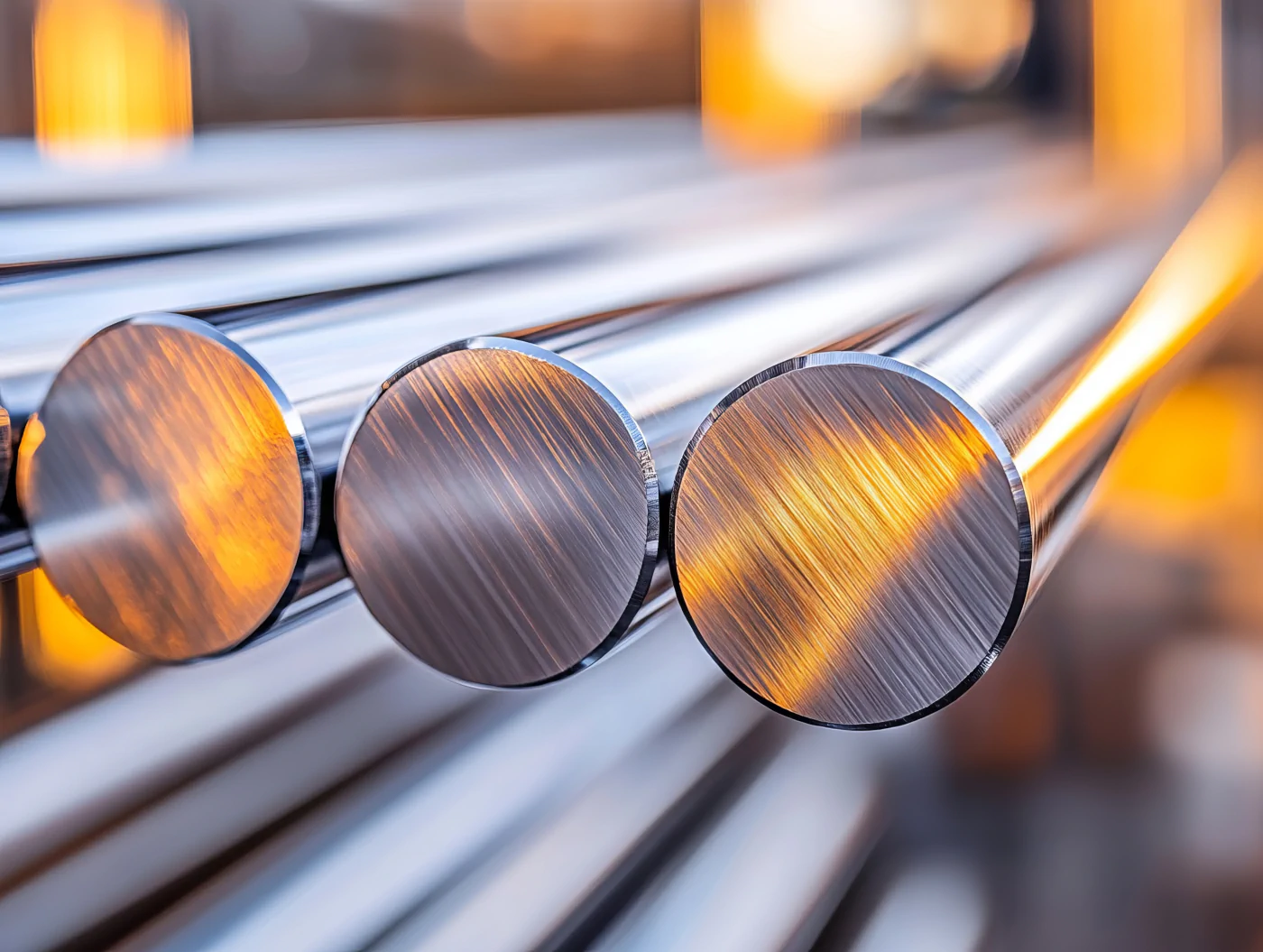
However, the strongest growth was visible in the long products segment. Consumption of bars and rods increased by as much as 50%, profiles increased their consumption by 18.4%, and shapes by as much as 200%, although in the latter case, a lower volume base must be taken into account. In total, the entire long products sector reached 78.1 thousand tonnes of consumption, which means a 37.7% year-on-year increase.
From the perspective of companies such as GMM INOX—enterprises that manufacture elements, structures, and installations made of stainless steel—the pipe sector is also particularly significant. In 2025, total consumption of stainless steel pipes in Poland increased by 11.3% to 61.2 thousand tonnes. Welded pipes dominated, with consumption reaching 58.3 thousand tonnes, or about 12% more than the year before. Meanwhile, seamless pipes recorded a drop in consumption to 2.9 thousand tonnes, but with a simultaneous 50% increase in exports.
Poland against the background of the European Union – strong domestic demand amid weaker EU production
In 2025, the Polish market stood out against Europe primarily in terms of consumption dynamics. According to statements by Andrzej Michalski-Stępkowski, President of the Polish Stainless Steel Association, Poland was a leader in the European Union in terms of stainless steel consumption, with demand growth in 2025 reaching around 10% year-on-year. The expert also points to a wide diversification of customers: from renewable energy, through transport, chemistry, shipyards, and aviation, to kitchen furniture.
This is important information because the Polish market is not exclusively dependent on a single sector. Stainless steel finds application in many branches of industry: food, chemical, pharmaceutical, machinery, energy, water and sewage, construction, and transport. Thanks to this, a slowdown in one industry can be partially counterbalanced by orders from other areas.
Against the background of the European Union, however, the situation looks less straightforward. According to data from the World Stainless Association, global metallurgical production of stainless steel in 2025 amounted to 64.2 million tonnes and was 2.1% higher than the previous year. At the same time, production in the European Union fell by 1.9% to 5.659 million tonnes. For comparison, China produced 40.868 million tonnes, recording a 3.6% increase.
This means that the European stainless steel market is under pressure. On the one hand, growing demand is visible in selected sectors; on the other hand, European producers must cope with high energy costs, climate regulations, import competition, and a weaker economic climate in parts of industry.
What drove the stainless steel market in Poland in 2025?
The increase in stainless steel consumption in Poland in 2025 was not accidental. It resulted from several phenomena that began to operate simultaneously. First, after a period of curtailing purchases, some companies began to rebuild current material requirements. Second, the Polish economy maintained a relatively good condition against the background of some Western European countries. Third, an increasing number of investments require durable materials that are resistant to corrosion and advantageous from the perspective of the entire installation lifecycle.
The report by “Nowa Stal” notes that customers from various industrial sectors—including food, chemical, paper, water, and construction—are increasingly choosing solutions with a longer lifecycle and lower operating costs. This is one of the factors increasing interest in stainless steel in applications such as pipelines, profiles, bars, shapes, and installation elements.
In practice, this means that stainless steel is increasingly treated not only as a more expensive material at the purchase stage, but as a more cost-effective solution from the perspective of long-term operation. This is of particular importance for investments in production plants, where failures, corrosion, downtime, and the need for frequent repairs generate real costs.
Forecasts for 2026 – moderate optimism, but without a sudden rebound
Forecasts for 2026 are cautiously positive. The annual report of the Polish Stainless Steel Association shows a forecast for apparent consumption of stainless steels in Poland at the level of 517 thousand tonnes in 2026, compared to 499.8 thousand tonnes in 2025. This would mean further growth, but slower than in 2025.
Such a scenario fits well with the sentiment of industry representatives. In March’s survey by “Nowa Stal,” moderate optimism prevailed. Interviewees did not predict a sudden improvement in the situation, but pointed to the possibility of a gradual recovery, especially if activity improves in the processing industry, infrastructure, renewable energy, and the defense sector.
At the same time, many companies emphasized that customers remain cautious. They are more likely to buy steel for current needs than to build large inventories. This means that demand in 2026 may be uneven: better in selected segments of industry, but still susceptible to price changes, financing costs, delivery times, and the condition of major customers in Europe.
Initial global data for 2026 also show a mixed picture. The World Stainless Association reported that global metallurgical production of stainless steel in the first quarter of 2026 amounted to 15.8 million tonnes and was 2.5% higher than the previous year. At the same time, production in the European Union fell by 4.6% during this period to 1.468 million tonnes.
This suggests that Poland may continue to benefit from relatively strong domestic demand, while operating within a wider European market that is still facing significant cost pressures, tighter regulation and intense international competition.
CBAM, imports and pricing – the key factors shaping the market in 2026
One of the most important issues affecting the stainless steel market in 2026 is the Carbon Border Adjustment Mechanism (CBAM), the EU framework designed to account for the CO₂ emissions embedded in certain imported materials. Its purpose is to create a more level playing field between EU-based producers, who are subject to European carbon costs, and suppliers importing material from outside the European Union. In practice, however, the mechanism continues to raise significant concerns, particularly among distributors, service centres and downstream processing companies.
Forum Branżowe refers to critical assessments of CBAM, highlighting the complexity of the regulation, the challenges involved in implementing it and the potential for higher material prices within the EU. Another concern is that the mechanism does not fully cover finished products manufactured from these materials. This could place European fabricators and manufacturers that rely heavily on stainless steel at a competitive disadvantage compared with suppliers of finished goods from outside the EU.
From a market perspective, this may have several consequences. Firstly, stainless steel prices within the EU could remain higher than those available in non-European markets. Secondly, some companies may choose to secure material earlier in order to reduce their exposure to future price increases. Thirdly, supply reliability, material origin, traceability and supporting documentation are likely to become increasingly important, alongside cooperation with suppliers that can operate efficiently within the new regulatory environment.
Outlook for 2027 – three possible scenarios
The available industry reports do not provide a single, definitive numerical forecast for the Polish stainless steel market in 2027. It is, however, possible to build a set of realistic scenarios based on market developments in 2025, expectations for 2026, current industry sentiment and the broader economic and regulatory environment across the European Union.
Scenariusz bazowy: dalszy, umiarkowany wzrost
The most likely outcome appears to be a scenario of moderate growth. If stainless steel consumption in Poland does in fact approach around 517,000 tonnes in 2026, the market could continue to improve gradually in 2027. Under this scenario, consumption could reach approximately 525,000–545,000 tonnes, assuming greater stability across the European economy, continued industrial investment and sustained demand from infrastructure, energy, machinery manufacturing and process engineering applications.
Optimistic scenario: a stronger recovery in investment
Under a more optimistic scenario, the Polish market could benefit from a higher level of EU-funded investment, further development of the energy sector, modernisation of manufacturing plants, a recovery in exports and growing demand for durable, high-performance materials across industry. In this case, stainless steel consumption in Poland could exceed 550,000 tonnes in 2027.
Cautious scenario: cost pressure and weak EU demand
The cautious scenario assumes that weaker economic conditions across the European Union persist for longer, while high financing costs, energy prices, regulatory pressure and geopolitical uncertainty continue to restrict new investment. In this environment, the Polish market could remain close to 2025–2026 levels, with only limited or uneven growth. Sectors heavily dependent on exports to Western Europe would be particularly exposed.
Global direction: less focus on volume, greater emphasis on quality
Against the backdrop of the European and Polish market outlook, it is also worth considering a broader shift taking place globally. According to analysis referenced by Mellow Stainless Steel, China’s stainless steel industry is increasingly moving away from a strategy focused primarily on production volume and towards higher quality, innovation, advanced manufacturing and greater added value.
This trend is also significant for Europe and Poland. Price competition from Asia will remain strong, but at the same time, an increasingly important role will be played by material quality, parameter repeatability, documentation, corrosion resistance, recyclability, environmental footprint, and comprehensive technical service. For industrial customers, the mere price per tonne of steel is no longer the sole criterion. Increasingly, the total cost of ownership of the finished component, installation, or device matters most.
What does the market situation mean for companies using stainless steel?
For companies manufacturing stainless steel components, tanks, structures, industrial pipelines, and technological installations, the years 2026–2027 will be a period in which three issues gain particular importance: purchasing planning, selecting the appropriate steel grade, and controlling the costs of the entire project.
First, price volatility and import regulations may make earlier planning of material orders more profitable than “last-minute” purchases. Second, with rising costs, investors will even more carefully analyze whether a given stainless steel truly meets the requirements of the process. Third, manufacturing quality will take on greater significance, because a well-designed and correctly executed stainless steel installation can operate for many years without costly downtime.
In practice, this means an increase in the importance of companies that not only process stainless steel, but can also advise on materials, manufacturing technology, welding, laser cutting, prefabrication, and the assembly of industrial elements. For food, chemical, pharmaceutical, energy, and production plants, stainless steel will remain one of the key investment materials.
Stainless steel and industrial pipelines and technological installations
One of the areas where stainless steel is of particular importance is industrial pipelines and technological installations. The growth in consumption of stainless steel pipes in Poland in 2025 shows that industrial plants are increasingly eager to invest in durable and resistant solutions. This applies primarily to installations that come into contact with process water, process media, cleaning agents, food products, chemicals, or operate in environments with increased humidity.
In this area, not only material availability matters, but also manufacturing quality. Stainless steel pipelines require the proper selection of grades, correct welding, joint inspection, hygienic design, and often also proper insulation. Therefore, the forecasted increase in demand for stainless steel may translate into a higher number of investments in installation modernization, element prefabrication, construction of new technological lines, and replacement of older systems susceptible to corrosion.
Summary
The year 2025 was a period of clear improvement for the Polish stainless steel market. Apparent consumption rose to 499.8 thousand tonnes, imports increased to nearly 610 thousand tonnes, and exports exceeded 110 thousand tonnes. The long products, pipe, and flat products segments—which are crucial for industry and processing—performed particularly well.
Against the background of the European Union, Poland performs favorably in terms of demand and customer diversification, but the entire European market remains under pressure. Global stainless steel production increased in 2025, while EU production fell. In the first quarter of 2026, this divergence remained visible: world production increased, while EU production decreased again.
Forecasts for 2026 are moderately optimistic. The market is expected to grow, but without a sudden rebound. Key factors will include industrial investments, energy transition, the defense sector, machinery manufacturing, financing costs, and CBAM-related regulations. In 2027, the most likely scenario appears to be continued, gradual growth, although its scale will depend on the condition of the European economy and the stability of supply chains.
For industrial companies, this means one thing: stainless steel will remain a strategic material. It will be particularly important wherever durability, corrosion resistance, hygiene, process safety, and lower operating costs over the entire installation lifecycle matter most.

