

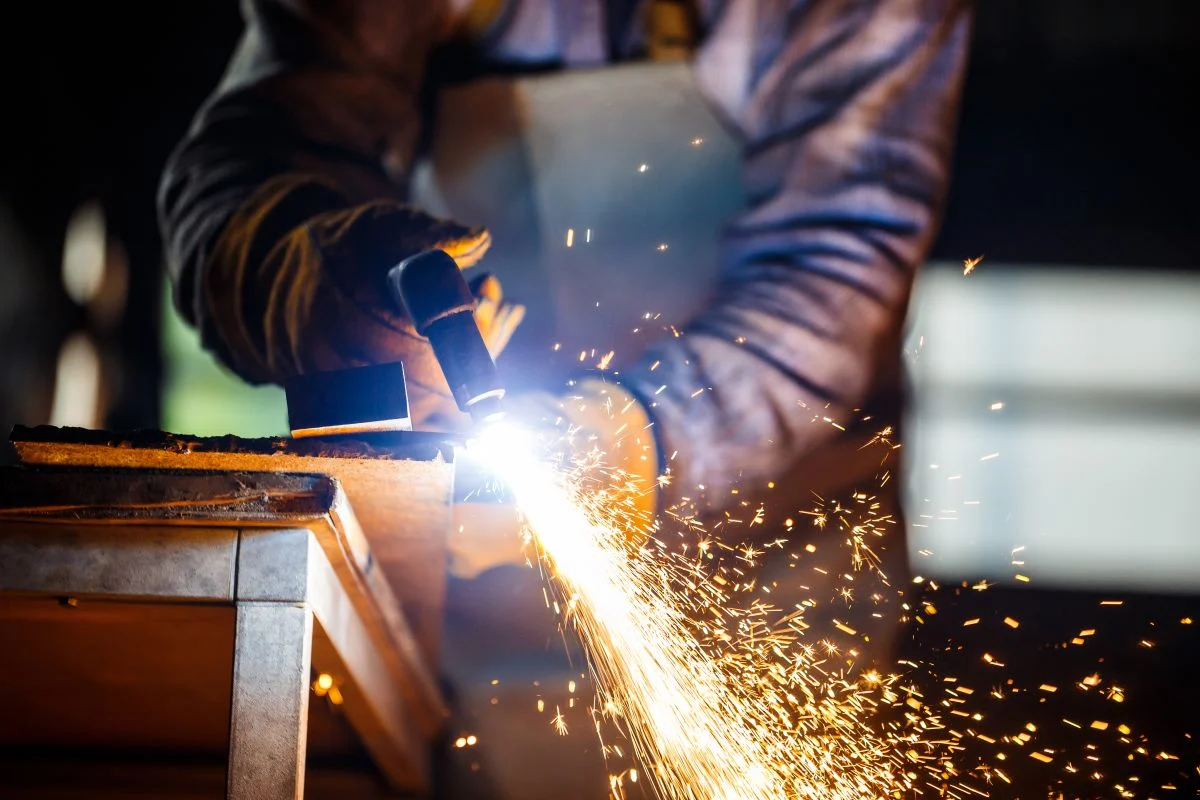


Welding safety is a critical pillar of operational management in every industrial plant, production facility, and construction site. The process involves exposure to high temperatures, electric arcs, UV/IR radiation, molten metal spatter, chemical fumes, and high-voltage risks. Compliance with Health and Safety (H&S) regulations is not a mere formality — it is a fundamental requirement to ensure the structural integrity of the workflow and the life-safety of the workforce.
This guide provides a comprehensive analysis of welding safety protocols, ranging from workstation organization to advanced Personal Protective Equipment (PPE) and hazard mitigation.
1. Core Hazards in Industrial Welding
The welding environment generates multiple high-risk factors that require rigorous monitoring:
Electric Arc Radiation: Intense UV and IR radiation can cause severe retinal damage (Photokeratitis) and skin burns.
Thermal Hazards: Extreme temperatures pose a constant risk of burns from base materials and molten spatter.
Welding Fumes and Gases: Inhalation of metallic particulate matter and chemical compounds can lead to chronic respiratory failure.
Fire and Explosion Risks: High-energy sparks can ignite volatile substances in the vicinity.
Electrical Shock: High-current operations, especially in humid conditions, present lethal risks.
Acoustic Hazards: Continuous exposure to high-decibel noise and mechanical vibrations.
2. Strategic Organisation of Welding Workstations
A certified welding workstation must be audited before operations commence:
Hazardous Zone Clearance: Remove all flammable materials within a minimum 5-meter radius.
Ventilation Systems: Ensure high-efficiency natural or forced mechanical ventilation (local exhaust systems).
Radiation Shielding: Utilize protective welding screens to shield auxiliary staff and bystanders.
Technical Integrity: Conduct pre-work inspections of cables, grounding systems, and equipment insulation.
Illumination and Ergonomics: The area must be well-lit and organized to prevent tripping hazards or equipment damage.
3. Personal Protective Equipment (PPE) Standards
At GMM INOX, we emphasize that PPE is the final line of defense. Equipment must comply with international EN ISO standards:
3.1 Eye and Face Protection
Auto-Darkening Helmets: Equipped with high-grade optical filters.
Safety Eyewear: Ballistic-rated glasses for secondary protection during auxiliary tasks.
3.2 Thermal and Mechanical Protection
Heavy-Duty Welding Gloves: High-temperature resistant leather, specialized for MIG/MAG or TIG.
Flame-Resistant Apparel: Leather aprons, protective sleeves, and EN ISO certified clothing.
Safety Footwear: Steel-toed, anti-static, and heat-resistant soles.
3.3 Respiratory Safety
Active Filtration: Use of FFP3 class masks or Powered Air Purifying Respirators (PAPR) for high-fume environments.
4. Chemical Hazard Mitigation
Welding fumes often contain iron, manganese, chromium, and nickel oxides. Long-term exposure without source-capture extraction systems increases the risk of chronic neurological damage and carcinogenicity. Continuous air quality monitoring is a standard requirement for high-specification production.
5. Fire Prevention and Hot Work Permits
To eliminate fire hazards, industrial plants must implement Hot Work Permit procedures:
Deploy fire-resistant welding mats to contain slag and sparks.
Maintain immediate access to dry powder or CO2 fire extinguishers.
Designate a Safety Supervisor for post-work fire watch to monitor potential smoldering.
6. Electrical Safety and Grounding
Arc welding utilizes high-amperage current. To prevent electrocution:
Verify the dielectric strength of all insulation.
Ensure equipotential grounding of all workpieces and machinery.
Prohibit operations in high-humidity or damp environments.
Schedule regular technical inspections for all welding power sources.
7. Pre-Welding Safety Checklist
Implementing a daily safety audit significantly reduces incident rates:
Is the workstation clear of clutter and flammable debris?
Is the exhaust ventilation system operational?
Is all welding equipment certified and in good technical condition?
Is the welder equipped with the full PPE set required for the specific method?
Is a certified fire extinguisher within immediate reach?
Summary: Cultivating a Safety Culture
For GMM INOX, safety is not a cost—it is a strategic investment in operational stability, employee health, and corporate reputation. By integrating advanced protective technology with regular technical training, we create a high-performance working environment that minimizes risk and maximizes production efficiency.

