

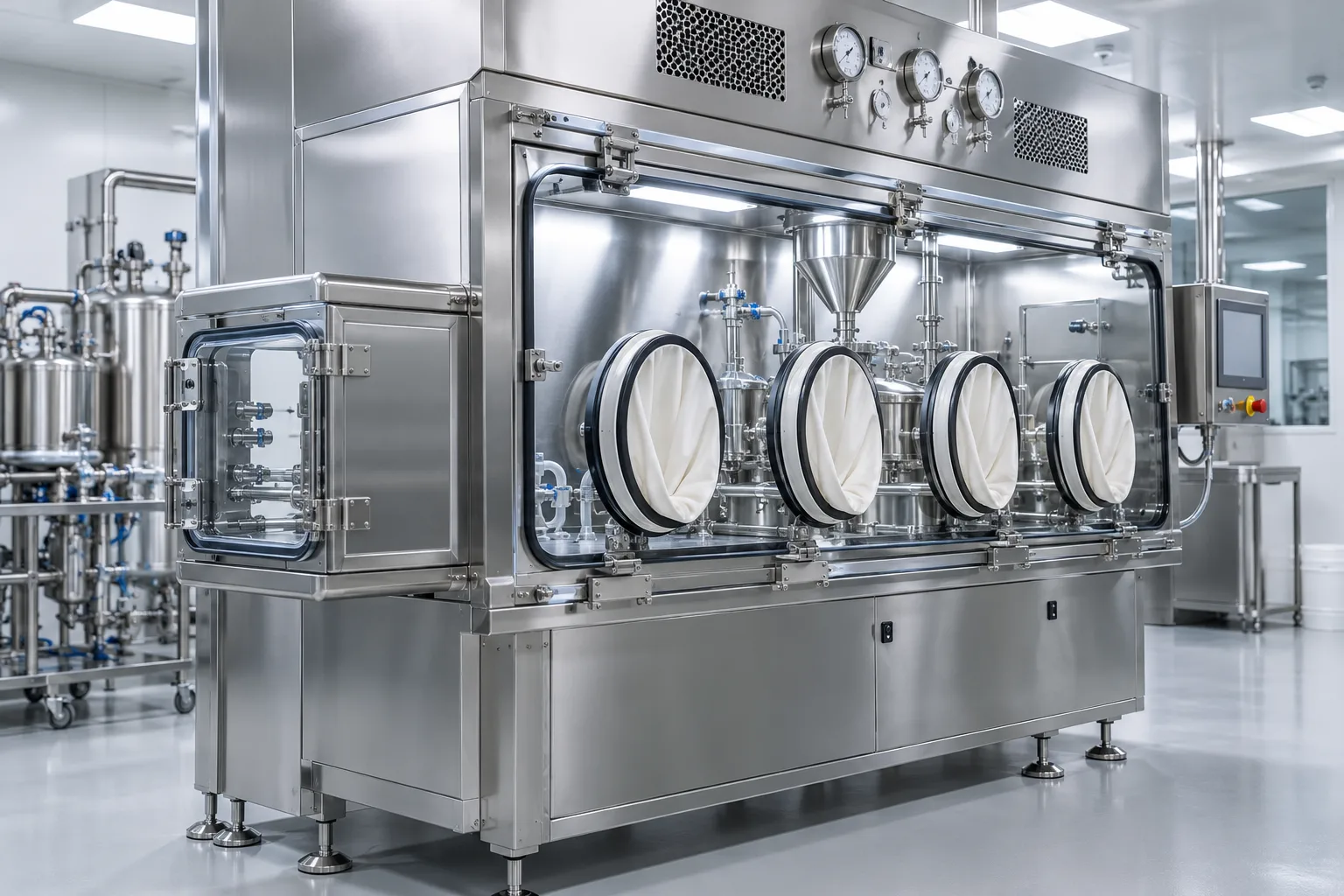


Process isolators are specialist containment systems designed to provide a controlled working environment physically separated from its surroundings. Their primary purpose is to protect products from contamination, safeguard operators against hazardous substances, or provide both forms of protection simultaneously. They are widely used in pharmaceutical manufacturing, biotechnology, chemical processing and research laboratories.
In modern production facilities, process isolators play an important role in maintaining product quality, operator safety and process consistency. Through carefully engineered barriers, air filtration and pressure control, they enable critical operations to take place under tightly controlled conditions.
But how do process isolators work, what are their main components, and which regulatory requirements must they meet?
What Is a Process Isolator?
A process isolator is an engineered enclosure that provides a controlled workspace separated from the surrounding environment by a physical barrier. Operators perform tasks using integrated glove ports, specialised transfer systems or automated equipment, without directly opening the processing chamber during normal operations.
The principal function of a process isolator is to minimise the risk of contaminants entering the process and, where required, prevent hazardous substances from escaping into the surrounding environment.
Depending on the application, process isolators may be used for:
- Aseptic manufacturing operations.
- Weighing and dispensing active pharmaceutical ingredients (APIs).
- Sampling and sample preparation.
- Controlled material transfer.
- Handling highly potent active pharmaceutical ingredients (HPAPIs).
- Specialist laboratory and research processes.
Unlike conventional open workstations, process isolators provide a physical barrier between personnel and the controlled processing environment.
This separation is particularly valuable in industries where contamination control and occupational safety are critical.
How Does a Process Isolator Work?
The operation of a process isolator relies on several integrated systems that maintain defined environmental conditions within the enclosure.
These typically include a protective barrier, air filtration, differential pressure control and carefully designed material transfer arrangements.
Physical Barriers and Enclosure Integrity
The isolator enclosure separates the processing chamber from the external environment.
Its construction typically incorporates stainless steel panels, transparent viewing windows, chemically resistant seals and glove ports that allow operators to work within the enclosed area.
Maintaining enclosure integrity helps control the movement of contaminants between the processing environment and the surrounding room.
Particular attention must be paid to joints, seals, access doors and transfer interfaces, as these can become potential leakage points.
HEPA Filtration and Airflow Control
Many pharmaceutical process isolators use High-Efficiency Particulate Air (HEPA) filtration to remove airborne particles from the supply air.
HEPA H14 filters, classified according to EN 1822, provide a minimum overall filtration efficiency of 99.995% at the most penetrating particle size (MPPS).
For aseptic processing, the airflow system must also be appropriately designed to protect critical operations from contamination.
However, HEPA filtration alone does not establish the required environmental classification. Airflow patterns, system integrity, environmental monitoring and equipment qualification are equally important.
Positive and Negative Pressure Isolators
Process isolators can operate under positive or negative pressure relative to the surrounding environment.
Positive-pressure isolators are generally used where product protection is the primary objective. Maintaining a suitable pressure differential helps reduce the ingress of unfiltered external air.
Negative-pressure isolators are commonly used for containment applications involving hazardous or highly potent substances. Negative pressure helps limit the escape of airborne contaminants if leakage occurs.
The appropriate pressure regime depends on the process, the hazards involved and the required level of product and operator protection.
Some applications demand more sophisticated pressure arrangements to achieve both objectives.
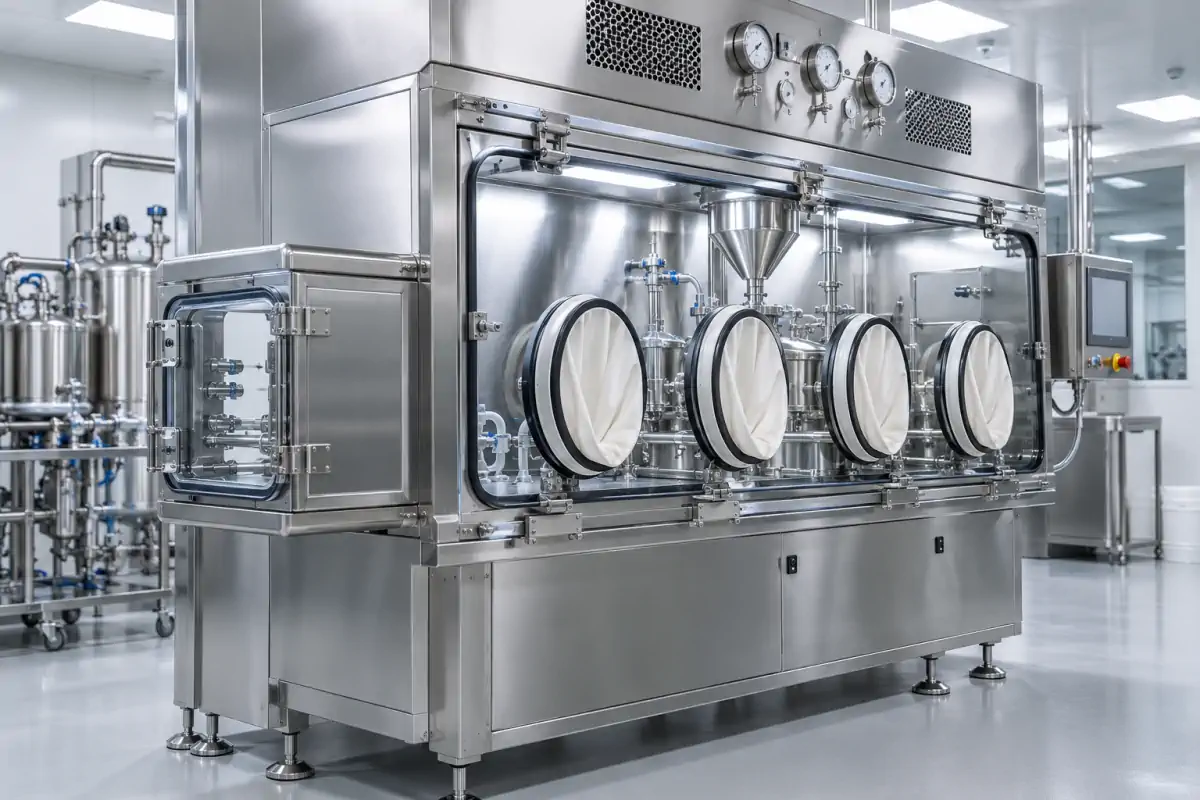
Process Isolator Design – Key Components
The design of a process isolator must reflect its intended application and operating requirements.
A system used for aseptic filling will differ significantly from one designed for handling hazardous pharmaceutical powders.
Nevertheless, most process isolators share several essential components.
Stainless Steel Enclosures
Stainless steel is widely used in pharmaceutical isolator manufacturing because of its corrosion resistance, mechanical properties and suitability for hygienic fabrication.
Common grades include:
- AISI 304 / EN 1.4301: Used in a range of standard equipment enclosures and structural components.
- AISI 304L / EN 1.4307: A low-carbon grade offering advantages for certain welded applications.
- AISI 316L / EN 1.4404: A molybdenum-bearing grade providing improved resistance to particular forms of corrosion.
Grade 316L is frequently specified for demanding pharmaceutical applications where chemical compatibility and effective cleaning are important.
However, material selection must always consider the actual cleaning agents, process chemicals and operating conditions.
The quality of welds, surface finishes, seals and internal geometry is equally important in achieving an effective hygienic design.
For further technical information, read our article Stainless Steel – Why Is It the Ultimate Guarantee of Quality for Process Vessels?.
Glove Ports and Material Transfer Systems
Integrated glove systems allow operators to manipulate materials and equipment within the isolator without directly breaching the protective barrier.
Material airlocks and Rapid Transfer Ports (RTPs) provide controlled methods of introducing and removing materials.
Correct positioning of these components is essential for safe operation, efficient workflows and operator ergonomics.
Glove integrity must also be maintained and verified through appropriate inspection and testing procedures.
Automation and Environmental Monitoring
Modern process isolators may incorporate Programmable Logic Controllers (PLCs), Human–Machine Interfaces (HMIs) and sensors for monitoring critical operating conditions.
Typical monitored parameters include differential pressure, airflow, filter condition, decontamination cycles and alarm status.
The required level of automation and monitoring should be determined by the process specification and risk assessment.
Types of Process Isolators
Process isolators are available in several configurations, each designed to meet specific contamination control or operator protection requirements.
Aseptic Isolators
Aseptic isolators are designed primarily to protect products from microbiological contamination during critical manufacturing operations.
They are commonly used in sterile pharmaceutical manufacturing, particularly for vial filling, handling sterile components and performing aseptic processing steps.
By reducing direct human intervention in the critical processing environment, isolators can make a significant contribution to contamination control.
Containment Isolators
Containment isolators are designed to protect operators and the surrounding environment from exposure to hazardous substances.
Typical applications include handling active pharmaceutical ingredients (APIs) and highly potent active pharmaceutical ingredients (HPAPIs).
Their performance depends on enclosure integrity, pressure control, filtration and safe material transfer systems.
The required containment performance should be established through a suitable occupational exposure and process risk assessment.
Laboratory Isolators
Laboratory isolators are used in research, development and analytical work where controlled operating conditions are required.
Their size, configuration and environmental controls are selected according to the substances handled and the laboratory procedures involved.
Where Are Process Isolators Used?
Process isolators are employed across industries where contamination prevention, controlled processing conditions and personnel protection are essential.
Pharmaceutical Manufacturing
The pharmaceutical industry is one of the principal users of process isolator technology.
Applications include sterile drug manufacturing, aseptic filling, active ingredient dispensing, material transfer and other operations requiring controlled environments.
These systems must be designed with the applicable Good Manufacturing Practice (GMP) requirements and contamination control strategy in mind.
GMM INOX designs and manufactures pharmaceutical containment chambers and process isolators tailored to individual manufacturing and technical requirements.
Biotechnology
In biotechnology, process isolators may be used for selected operations involving biological materials, sample preparation and controlled material handling.
Equipment selection must consider both contamination control requirements and the biological hazards associated with the process.
Chemical Processing
In the chemical industry, isolators can provide controlled environments for weighing, dispensing, sampling and transferring hazardous or environmentally sensitive substances.
Depending on the materials involved, additional chemical resistance, ventilation or explosion protection measures may be required.
Research and Development Laboratories
Research laboratories use isolator technology to perform specialised procedures under repeatable, controlled conditions.
Bespoke configurations allow equipment to be adapted to particular experimental processes and laboratory requirements.
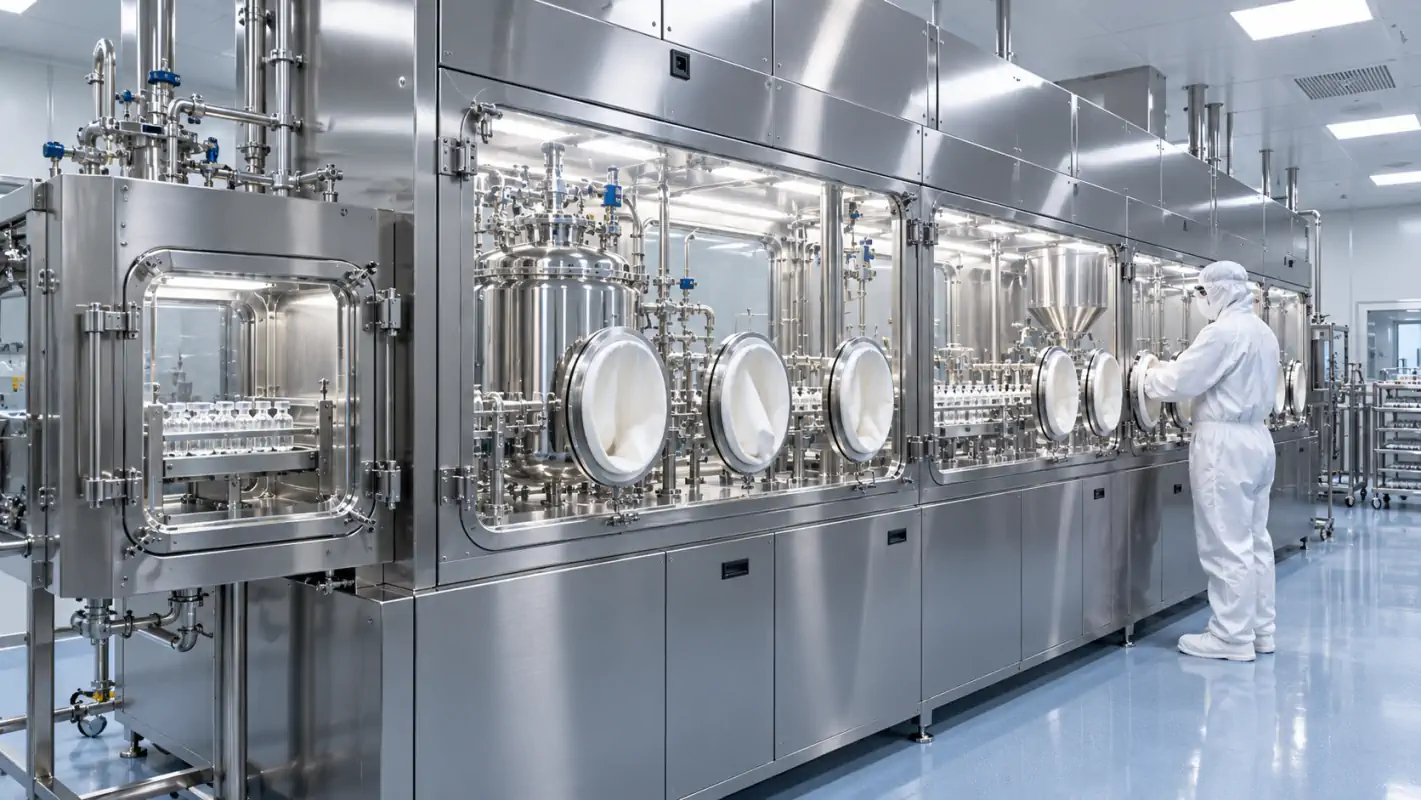
Process Isolators and GMP Requirements
In pharmaceutical manufacturing, process isolators must be considered within the relevant Good Manufacturing Practice (GMP) framework.
One of the most important regulatory documents is EU GMP Annex 1 – Manufacture of Sterile Medicinal Products, which establishes expectations for contamination control during sterile manufacturing.
For aseptic isolators, key considerations include:
- Suitable enclosure design and integrity.
- Glove integrity testing.
- Effective air filtration and environmental monitoring.
- Controlled material transfer.
- Validated biodecontamination procedures.
- Equipment qualification and technical documentation.
An important concept within GMP is the Contamination Control Strategy (CCS).
The CCS identifies potential sources of contamination and defines the technical and procedural controls necessary to manage the associated risks.
Installing an isolator does not automatically make a manufacturing process GMP-compliant. Equipment design, qualification, operating procedures and ongoing monitoring must work together as part of an effective quality system.
Process Isolators vs RABS – What Is the Difference?
In pharmaceutical manufacturing, process isolators are often compared with Restricted Access Barrier Systems (RABS).
Both technologies help reduce contamination risks by limiting operator access to critical manufacturing areas, but they differ in their degree of physical separation and operating arrangements.
| Feature | Process Isolator | RABS |
| Physical separation | High degree of separation from the surrounding environment | Physical barrier with restricted access |
| Operator access | Glove ports and controlled transfer systems | Glove ports and controlled interventions |
| Decontamination | Validated biodecontamination required for aseptic isolators | Appropriate validated disinfection procedures |
| Background environment | Depends on design and risk assessment | At least Grade B for aseptic manufacturing |
| Typical application | Processes requiring a high level of separation | Aseptic production lines with restricted access to critical areas |
The choice between a process isolator and a RABS should be based on process requirements, contamination risks, operational needs and integration with existing equipment.
Neither technology should be selected solely on the basis of initial equipment cost.
Manufacturing of Metal Housings for Process Isolators
The manufacturing of metal components for process isolators is carried out based on technical documentation provided by the client. Based on this documentation, we select appropriate manufacturing technologies and production methods, taking into account the design requirements and the specific characteristics of individual components.
Our scope of work covers the manufacturing of the metal housing of the isolator in accordance with the supplied documentation. We do not design complete devices or take responsibility for the selection and supply of process equipment or purchased components. The scope of manufacturing may vary depending on the design of each isolator and the requirements specified in the documentation.
Several factors are particularly important in the manufacturing process:
- Manufacturing precision – accurate reproduction of the geometry and dimensions specified in the technical documentation.
- Weld quality – proper execution of welded joints, which is essential for the durability and quality of the structure.
- Surface quality – careful finishing of metal components in accordance with the specified surface requirements.
- Manufacturing technology selection – choosing appropriate machining and joining methods to suit the design and production requirements.
- Manufacturing quality control – verifying that the manufactured components comply with the supplied documentation and the agreed scope of work.
The manufacturing of metal isolator housings relies on technologies such as stainless steel welding and precision laser cutting. Their appropriate application helps achieve the required dimensional accuracy and quality of structural components.
Quality Control and Compliance with Technical Documentation
At every stage of manufacturing, it is essential to ensure that the finished components comply with the technical documentation and the requirements agreed upon for each project.
The scope of inspections and any additional testing depends on the specific design, the requirements set out in the documentation, and the allocation of responsibilities among the parties involved in delivering the equipment.
Acceptance testing of the complete isolator, FAT (Factory Acceptance Test) and SAT (Site Acceptance Test), as well as equipment qualification activities such as DQ, IQ, OQ and PQ, fall within the scope of responsibility defined for each project. These activities are not automatically included in our manufacturing services.
Our responsibility is to manufacture the metal isolator housing with due care, in accordance with the supplied documentation and the agreed scope of production.
How Much Does a Process Isolator Cost?
The cost of a process isolator depends on its dimensions, design complexity, materials, technical specifications and integrated systems.
A compact laboratory isolator may differ substantially in cost from an automated pharmaceutical containment system integrated into an aseptic production line.
The principal cost factors include:
- Chamber dimensions and configuration.
- Stainless steel grade and material quantity.
- Air filtration and pressure control systems.
- Number of glove ports and transfer interfaces.
- Automation and control systems.
- Biodecontamination equipment.
- Technical documentation, testing and qualification requirements.
For bespoke pharmaceutical isolators, the most accurate pricing is obtained through an individual engineering assessment based on the URS and process requirements.
Operating expenditure, maintenance, replacement filters and gloves, and periodic integrity testing should also be considered when assessing the overall cost.
How to Choose a Process Isolator Manufacturer
Selecting a suitable process isolator manufacturer requires more than comparing equipment prices.
Engineering expertise, stainless steel fabrication capabilities, quality control and an understanding of pharmaceutical production requirements are essential.
When evaluating a manufacturer, consider its ability to provide:
- Bespoke equipment design.
- Appropriate material specifications.
- High-quality stainless steel fabrication and welding.
- Integration with existing processing equipment.
- Technical documentation and agreed acceptance testing.
- Installation and commissioning support.
GMM INOX specialises in the design and manufacture of bespoke stainless steel equipment for pharmaceutical and other demanding industrial applications.
Its product portfolio includes pharmaceutical chambers and engineered containment solutions developed to meet project-specific technical and manufacturing requirements.
Explore GMM INOX’s pharmaceutical chambers and process isolation solutions to learn more about its manufacturing capabilities.
Summary – The Role of Pharmaceutical Chambers in Modern Industry
Pharmaceutical chambers are an important part of the infrastructure used in the pharmaceutical and biotechnology industries, where process control, cleanliness and production safety are essential.
Manufacturing the metal structure of this type of equipment requires precise material processing, the appropriate selection of manufacturing technologies and compliance with the requirements specified in the technical documentation.
GMM INOX specializes in manufacturing metal structures and housings for pharmaceutical chambers based on technical documentation provided by the client. We adapt our manufacturing processes to the requirements of the documentation, using the technologies and production methods available at our facility.
Our responsibility covers the agreed scope of work related to the manufacturing of metal components. It does not include the design of complete equipment, the procurement of equipment and components other than metal components, or the performance of FAT and SAT acceptance tests.
If you are looking for a manufacturing partner for metal components for pharmaceutical chambers, explore the GMM INOX offering and learn more about our manufacturing capabilities.

